+86-632-3621866
- Chinese
- French
- German
- Portuguese
- Spanish
- Russian
- Japanese
- Korean
- Arabic
- Irish
- Greek
- Turkish
- Italian
- Danish
- Romanian
- Indonesian
- Czech
- Afrikaans
- Swedish
- Polish
- Basque
- Catalan
- Esperanto
- Hindi
- Lao
- Albanian
- Amharic
- Armenian
- Azerbaijani
- Belarusian
- Bengali
- Bosnian
- Bulgarian
- Cebuano
- Chichewa
- Corsican
- Croatian
- Dutch
- Estonian
- Filipino
- Finnish
- Frisian
- Galician
- Georgian
- Gujarati
- Haitian
- Hausa
- Hawaiian
- Hebrew
- Hmong
- Hungarian
- Icelandic
- Igbo
- Javanese
- Kannada
- Kazakh
- Khmer
- Kurdish
- Kyrgyz
- Latin
- Latvian
- Lithuanian
- Luxembou..
- Macedonian
- Malagasy
- Malay
- Malayalam
- Maltese
- Maori
- Marathi
- Mongolian
- Burmese
- Nepali
- Norwegian
- Pashto
- Persian
- Punjabi
- Serbian
- Sesotho
- Sinhala
- Slovak
- Slovenian
- Somali
- Samoan
- Scots Gaelic
- Shona
- Sindhi
- Sundanese
- Swahili
- Tajik
- Tamil
- Telugu
- Thai
- Ukrainian
- Urdu
- Uzbek
- Vietnamese
- Welsh
- Xhosa
- Yiddish
- Yoruba
- Zulu
- Kinyarwanda
- Tatar
- Oriya
- Turkmen
- Uyghur



1.11dtex38mm
The Intricacies of 1.11dtex38mm Fibers in Textile Production
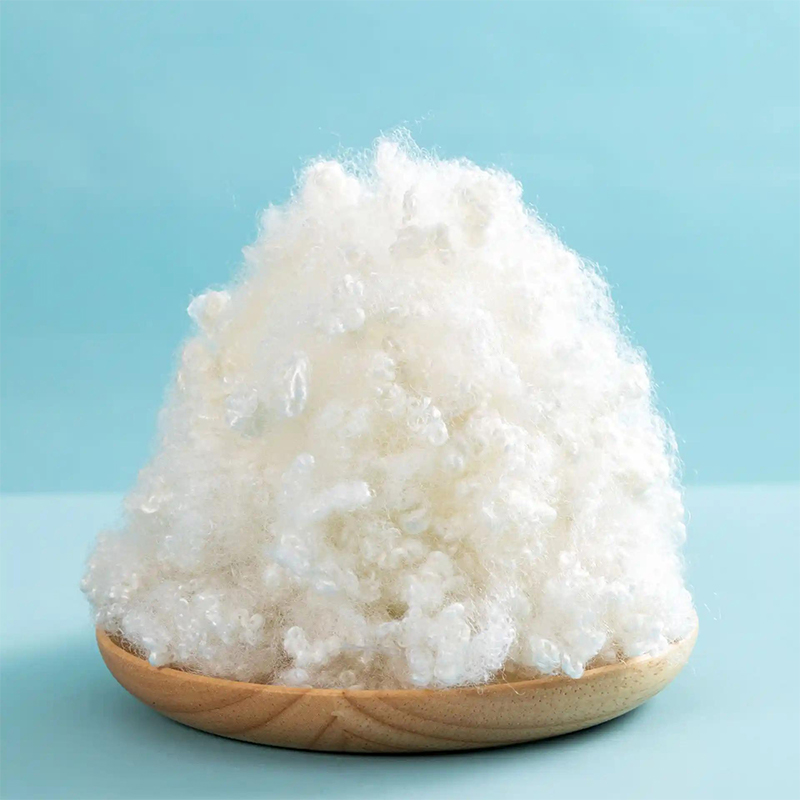
Understanding the specifics of 1.11dtex38mm fibers can make all the difference in textile manufacturing. These minute variations shape everything from fabric texture to performance, often overlooked by those not directly involved in fiber production.
Decoding the Fiber Specifications
Let’s start with the number itself: 1.11dtex38mm. Here, 1.11 denotes the decitex (dtex), a measure of fiber thickness. Many newcomers mistake it for denier, another unit, but dtex is crucial when precision is needed for weight versus length evaluations in textile creation.
The 38mm section refers to fiber length. Now, why should this matter? During my time in the field, particularly when collaborating with SHANDONG ZHINK NEW MATERIAL CO., LTD, we've found that this particular length strikes a balance. It offers enough stretch without compromising the strength you look for in high-quality fabrics.
A common mistake is underestimating how these fibers impact weaving or knitting processes. Short fibers, for instance, lead to fluffing and fabric inconsistencies. That's why understanding these specifications is vital for textile innovation and quality control.
Influence on Fabric Properties
When I first heard of 1.11dtex38mm, I was intrigued by how it could improve specific fabric qualities. From my work with Zhink New Material, integrating these fibers can drastically change the fabric's hand feel and durability.
R&D teams often experiment with fiber blends, and I've noticed how even slight variations in fiber specs can yield dramatic shifts in textile behavior. A softer hand or increased abrasion resistance may come down to these detailed fibers, as discovered through hands-on trials.
Our findings influenced us to adjust production parameters, particularly focusing on maintaining fiber uniformity—a critical feature we couldn't afford to overlook. The website has detailed more nuances on these aspects.
Challenges in Commercial Use
Real-world application, however, isn't without hurdles. During a project aimed at developing advanced sports textiles, we had issues with fiber behavior at high speeds in looms, typically caused by inappropriate tension settings or incompatible machinery.
We solved these problems by adjusting our production lines. Incorporating feedback from the production floor provided insights we couldn’t have otherwise foreseen. The experience underscored how 1.11dtex38mm fibers aren't just numbers; they're parameters that require careful integration into the manufacturing process.
It's not uncommon for commercial-scale applications to face these types of challenges. Troubleshooting requires a hands-on approach informed by industry knowledge and a sharp eye for detail.
R&D: The Backbone of Innovation
The team at Zhink New Material has been pivotal in advancing our understanding of new textile fibers. Our R&D ethos revolves around experimentation. Breathable sportswear was a specific area where we noticed enhancements when using 1.11dtex38mm fibers. The resultant fabric achieved unprecedented moisture-wicking capabilities.
Through trial and error, we document specific outcomes in our labs, which inform our mass production techniques. These documented trials are as crucial as the mechanical tweaking made in the production phase itself.
Anyone involved in manufacturing can appreciate that R&D is not merely an isolated segment; it’s the spillover that enriches every subsequent project. You can dive deeper into these insights on our website.
The Verdict: Impact on the Textile Industry
So, what does 1.11dtex38mm ultimately contribute to the textile industry? From my experience working with diverse teams and new materials, it's evident these specific fibers offer a compelling combination of performance and aesthetic attributes.
For me, it’s about the nuanced, hands-on impact these fibers have when utilized prudently. Our venture into smart textiles continues, guided by the unparalleled adaptability of these fibers, as evidenced after numerous deployments across different textile categories.
This knowledge isn't merely academic; it’s what has set industry leaders, like SHANDONG ZHINK NEW MATERIAL CO., LTD, apart in crafting the textiles of the future. Those interested in the progressive edge of textile manufacturing would do well to consider how such detailed specifications can transform their practice.
Related Products
Related Products