+86-632-3621866
- Chinese
- French
- German
- Portuguese
- Spanish
- Russian
- Japanese
- Korean
- Arabic
- Irish
- Greek
- Turkish
- Italian
- Danish
- Romanian
- Indonesian
- Czech
- Afrikaans
- Swedish
- Polish
- Basque
- Catalan
- Esperanto
- Hindi
- Lao
- Albanian
- Amharic
- Armenian
- Azerbaijani
- Belarusian
- Bengali
- Bosnian
- Bulgarian
- Cebuano
- Chichewa
- Corsican
- Croatian
- Dutch
- Estonian
- Filipino
- Finnish
- Frisian
- Galician
- Georgian
- Gujarati
- Haitian
- Hausa
- Hawaiian
- Hebrew
- Hmong
- Hungarian
- Icelandic
- Igbo
- Javanese
- Kannada
- Kazakh
- Khmer
- Kurdish
- Kyrgyz
- Latin
- Latvian
- Lithuanian
- Luxembou..
- Macedonian
- Malagasy
- Malay
- Malayalam
- Maltese
- Maori
- Marathi
- Mongolian
- Burmese
- Nepali
- Norwegian
- Pashto
- Persian
- Punjabi
- Serbian
- Sesotho
- Sinhala
- Slovak
- Slovenian
- Somali
- Samoan
- Scots Gaelic
- Shona
- Sindhi
- Sundanese
- Swahili
- Tajik
- Tamil
- Telugu
- Thai
- Ukrainian
- Urdu
- Uzbek
- Vietnamese
- Welsh
- Xhosa
- Yiddish
- Yoruba
- Zulu
- Kinyarwanda
- Tatar
- Oriya
- Turkmen
- Uyghur


1D—8D/32-102
The Nuances of 1D—8D/32-102 in Textile Innovation
Understanding the complexities behind 1D—8D/32-102 can revolutionize the textile industry. This is a tale of innovation, experimentation, and insightful blunders that reveal how these measurements impact material quality and performance.
Demystifying the Denier: Understanding 1D—8D
In textile manufacturing, terms like 1D—8D represent the denier, a unit of measurement for fiber thickness. Often misunderstood, the range from 1D to 8D covers ultra-fine to moderately coarse fibers. Fine-tuning this aspect can be surprisingly intricate. With different deniers suitable for specific fabric applications, striking a balance is both an art and a science.
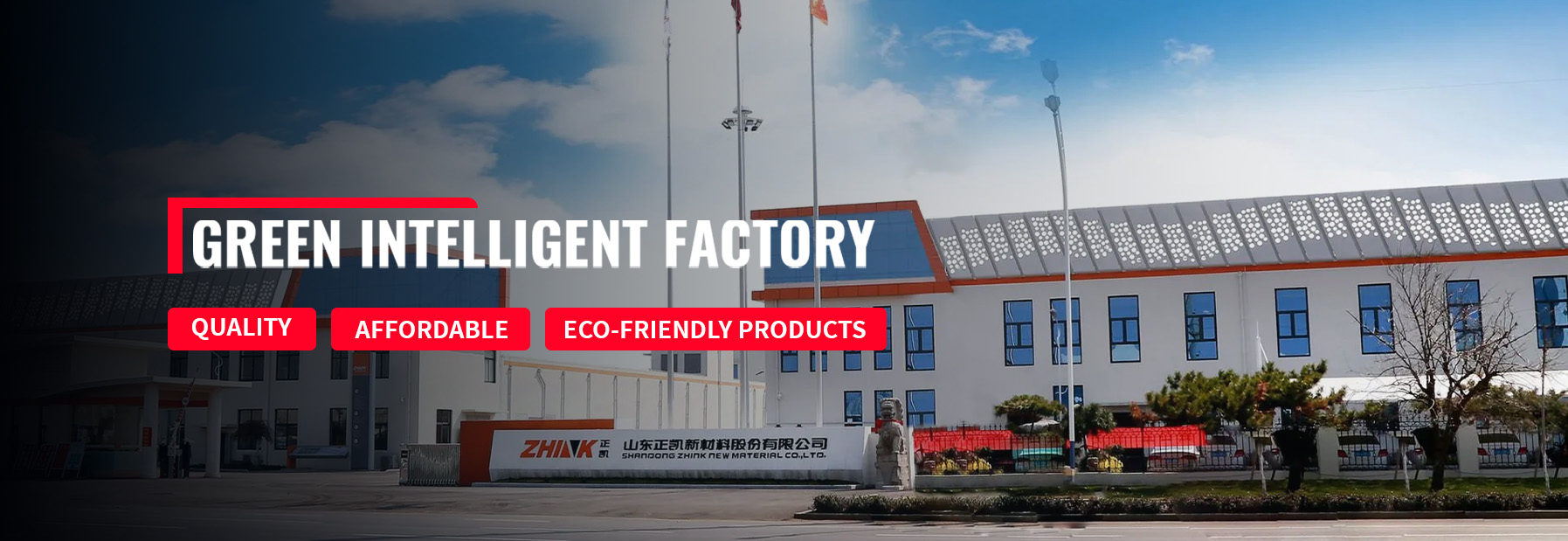
Take, for example, a project with SHANDONG ZHINK NEW MATERIAL CO., LTD, which focuses on creating versatile textiles. On a particular occasion while experimenting with their advanced yarn lines, adjusting the denier from 5D to 7D significantly enhanced both strength and flexibility for a sportswear fabric, promising superior performance.
Interestingly, while higher deniers generally provide more durability, there's a trade-off with texture softness. It's a classic case of trial and error, where experience and judgment call the shots in achieving the right mix. This continuous learning curve is what ensures product excellence at Zhink New Material.
Decoding 32-102: Fabric Integration at Its Best
The figures 32-102 often refer to the filament count per yarn. Engineers and designers alike frequently engage in rigorous testing to determine optimal yarn structures. During a collaborative workshop at Zhink, the choice of 32 filaments versus 102 filaments brought out an intriguing paradox—while 32-filament yarns often have higher tensile strengths per filament, 102-filament yarns exhibited better uniformity and drape.
Creating a hybrid approach yielded an unexpected breakthrough: combining filament variations within a single batch of fabric. This approach advanced the comfort and practicality of high-end fashion textiles, providing insights that we hadn't initially considered. It’s this adaptive mindset that propels the forward-thinking ethos at Zhink.
Understanding these details isn't merely academic. It’s a hands-on journey with market implications. As such, the Zhink team places great importance on field feedback, ensuring their textile innovations resonate with consumer needs and industry standards alike.
Challenges in Fiber Development
Drilling into the fiber development process reveals several challenges. R&D teams often encounter material inconsistencies, especially when scaling from laboratory to production. A particular incident involved a potential client batch where yarns spun at 8D seemed perfect in small quantities but unravelled into issues in large-scale tests.
Addressing these inconsistencies often requires revisiting the drawing board, re-evaluating process parameters, and sometimes, resourcing alternative materials. It's a fascinating conundrum that adds depth to the otherwise straightforward-seeming world of textiles.
While setbacks are part of the course, the iterative learnings form the backbone of improvement. Engaging with this process is what sets organizations like SHANDONG ZHINK NEW MATERIAL CO., LTD apart in an increasingly competitive.field.
The Role of Innovation and Sustainability
In the current landscape, the drive for sustainable production is paramount. Companies like Zhink target reducing waste in their fiber production processes, where refining precision for 1D—8D/32-102 parameters plays a crucial role. Lower waste leads to decreased environmental footprint, aligning with global eco-friendly mandates.
Moreover, the adoption of cutting-edge technology helps in refining production techniques. For instance, utilizing AI-driven analytics in assessing fiber quality ensures accurate and consistent output. It’s a commitment not just to innovation but to responsibility as well.
Ultimately, it’s these commitments that help transform challenges into opportunities, enabling reliable, efficient, and environmentally conscious product lines that meet the expectations of tomorrow’s consumers.
Case Studies and Practical Insights
Textile production is as much about creativity as it is about precision. One illuminating case involved diversifying yarn blends post an unexpected shortage of a primary raw material. Leveraging 1D—8D variations in existing stock, Zhink successfully maintained supply continuity while exploring new markets with blended options.
Each such instance teaches valuable insights into adaptability—an adaptable approach that doesn’t sit idle when confronted with obstacles, but instead forges new pathways. This adaptability has become a hallmark of Zhink’s operational philosophy.
In conclusion, navigating 1D—8D/32-102 complexities brings a lot more than just understanding numbers; it’s about an integrated approach that merges design, science, and intuition into a cohesive fabric of innovation. A journey led by pioneers in the field, like those at SHANDONG ZHINK NEW MATERIAL CO., LTD, continues shaping the future of textiles in impactful, sustainable ways.
Related Products
Related Products