+86-632-3621866
- Chinese
- French
- German
- Portuguese
- Spanish
- Russian
- Japanese
- Korean
- Arabic
- Irish
- Greek
- Turkish
- Italian
- Danish
- Romanian
- Indonesian
- Czech
- Afrikaans
- Swedish
- Polish
- Basque
- Catalan
- Esperanto
- Hindi
- Lao
- Albanian
- Amharic
- Armenian
- Azerbaijani
- Belarusian
- Bengali
- Bosnian
- Bulgarian
- Cebuano
- Chichewa
- Corsican
- Croatian
- Dutch
- Estonian
- Filipino
- Finnish
- Frisian
- Galician
- Georgian
- Gujarati
- Haitian
- Hausa
- Hawaiian
- Hebrew
- Hmong
- Hungarian
- Icelandic
- Igbo
- Javanese
- Kannada
- Kazakh
- Khmer
- Kurdish
- Kyrgyz
- Latin
- Latvian
- Lithuanian
- Luxembou..
- Macedonian
- Malagasy
- Malay
- Malayalam
- Maltese
- Maori
- Marathi
- Mongolian
- Burmese
- Nepali
- Norwegian
- Pashto
- Persian
- Punjabi
- Serbian
- Sesotho
- Sinhala
- Slovak
- Slovenian
- Somali
- Samoan
- Scots Gaelic
- Shona
- Sindhi
- Sundanese
- Swahili
- Tajik
- Tamil
- Telugu
- Thai
- Ukrainian
- Urdu
- Uzbek
- Vietnamese
- Welsh
- Xhosa
- Yiddish
- Yoruba
- Zulu
- Kinyarwanda
- Tatar
- Oriya
- Turkmen
- Uyghur


3.33dtex*88mm
The Untold Insights of 3.33dtex88mm Fibers
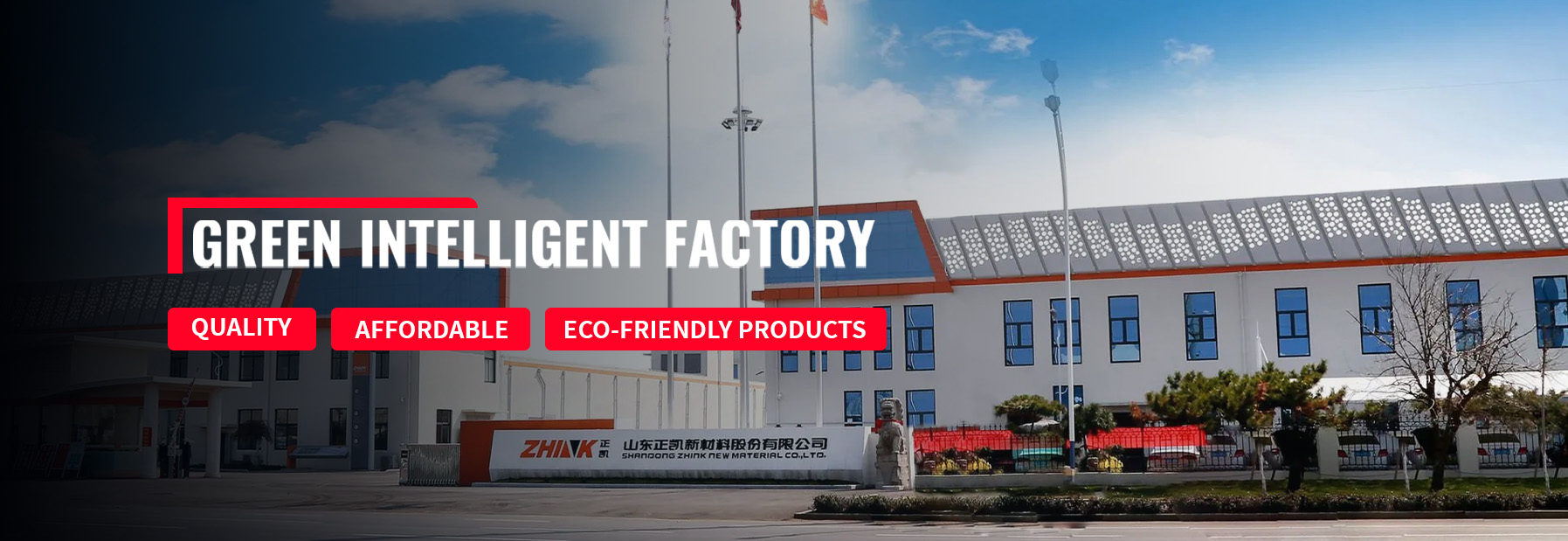
In the intricate world of textile fibers, nuanced details often make all the difference. The specification 3.33dtex88mm might seem esoteric, yet it holds the key to optimizing fabric performance for various applications. Let’s delve into what this truly entails and how industry players like SHANDONG ZHINK NEW MATERIAL CO., LTD leverage such specifications.
Understanding Fiber Specifications
Firstly, it's crucial to unpack what 3.33dtex88mm actually represents. The 'dtex' measure denotes the fiber's linear density, meaning how much 10,000 meters of the fiber weighs in grams. A measurement like 3.33dtex is indicative of a moderately fine fiber. Meanwhile, the '88mm' pertains to the fiber's cut length, contributing to how it behaves and feels in different textile applications.
In practical terms, these specifications influence the hand feel, durability, and even the aesthetic outcome of a fabric. When I first encountered these metrics in my career, I underestimated their impact on textile engineering. But soon, practical trials revealed how tweaking just a small aspect like dtex could drastically alter fabric resilience and softness.
Think about a scenario in nonwoven textiles. Fabrics that demand softness and drape without sacrificing durability often gravitate towards fibers like 3.33dtex88mm. Here, the challenge is maintaining consistent quality across batches—a challenge SHANDONG ZHINK NEW MATERIAL CO., LTD adeptly navigates with their advanced R&D capabilities.
Real-Life Applications and Trials
One vivid memory is a project involving high-performance sportswear. Using fibers with the 3.33dtex88mm specification, we aimed to achieve a balance between breathability and strength. The results were remarkable, enhancing the garment's comfort while maintaining structural integrity.
However, not all attempts were flawless. Early trials showed inconsistencies in yarn tension, a common issue when fibers don't adhere to precise dtex and length standards. It led to unexpected fabric pilling, a problem later resolved by tweaking processing parameters—a testament to the trial-and-error aspect ever-present in material research.
The learnings were pivotal. Ensuring compatibility between equipment and material specifications is vital. Technical adaptations based on my experiences now focus on reducing tension variations by fine-tuning machinery settings and environmental conditions.
The Role of Precision in Manufacturing
In textile production, precision is paramount. The manufacturing processes at SHANDONG ZHINK NEW MATERIAL CO., LTD, accessible at their website, are emblematic of this principle. Their focus on precision ensures that each fiber batch meets exacting standards, providing reliable performance every time.
This level of meticulous attention extends to every facet, from raw material selection to final product inspection. The ability to consistently produce fibers like 3.33dtex88mm demonstrates manufacturing prowess, underscoring why standardized practices are essential in this industry.
Client workshops and feedback loops further refine these processes. An anecdote comes to mind of a client session where direct product testing provided insights, leading to slight tweaks in fiber formulations that resulted in substantial performance improvements.
Challenges and Misconceptions
Despite its apparent simplicity, working with 3.33dtex88mm fibers involves overcoming several misconceptions. Many equate higher dtex with superior strength, overlooking factors like fiber length and blending techniques, which are equally crucial in determining fabric properties.
Early in my career, a significant learning curve involved understanding how varying environmental factors—humidity, temperature—affect fiber behaviour. Experiments showed that fibers like these are remarkably sensitive, necessitating controlled storage and processing conditions.
It’s essential to dispel myths surrounding the immediacy of adjustment results. Changes in fiber specification might necessitate patience and iterative testing. SHANDONG ZHINK NEW MATERIAL CO., LTD’s approach incorporates gradual scaling to achieve optimal outcomes.
Future Perspectives and Innovations
The world of textiles is continuously evolving, with improvements in fiber technology driving innovations. The 3.33dtex88mm specification serves as a springboard for creating materials engineered for future demands—be it in sustainable fashion or technical textiles.
Looking ahead, the focus is on integrating smart textiles within conventional frameworks. The adaptable nature of fibers like 3.33dtex88mm, when paired with technological advancements, opens new arenas for exploration, promising breakthroughs in wearable technology and intelligent fabric design.
Ultimately, experiences like these reinforce a fundamental truth in material science: understanding the subtleties of fiber specifications and maintaining an agile approach allows firms like SHANDONG ZHINK NEW MATERIAL CO., LTD to remain at the forefront of textile innovation.
Related Products
Related Products