+86-632-3621866
- Chinese
- French
- German
- Portuguese
- Spanish
- Russian
- Japanese
- Korean
- Arabic
- Irish
- Greek
- Turkish
- Italian
- Danish
- Romanian
- Indonesian
- Czech
- Afrikaans
- Swedish
- Polish
- Basque
- Catalan
- Esperanto
- Hindi
- Lao
- Albanian
- Amharic
- Armenian
- Azerbaijani
- Belarusian
- Bengali
- Bosnian
- Bulgarian
- Cebuano
- Chichewa
- Corsican
- Croatian
- Dutch
- Estonian
- Filipino
- Finnish
- Frisian
- Galician
- Georgian
- Gujarati
- Haitian
- Hausa
- Hawaiian
- Hebrew
- Hmong
- Hungarian
- Icelandic
- Igbo
- Javanese
- Kannada
- Kazakh
- Khmer
- Kurdish
- Kyrgyz
- Latin
- Latvian
- Lithuanian
- Luxembou..
- Macedonian
- Malagasy
- Malay
- Malayalam
- Maltese
- Maori
- Marathi
- Mongolian
- Burmese
- Nepali
- Norwegian
- Pashto
- Persian
- Punjabi
- Serbian
- Sesotho
- Sinhala
- Slovak
- Slovenian
- Somali
- Samoan
- Scots Gaelic
- Shona
- Sindhi
- Sundanese
- Swahili
- Tajik
- Tamil
- Telugu
- Thai
- Ukrainian
- Urdu
- Uzbek
- Vietnamese
- Welsh
- Xhosa
- Yiddish
- Yoruba
- Zulu
- Kinyarwanda
- Tatar
- Oriya
- Turkmen
- Uyghur


8D—10D/88
Understanding 8D—10D/88 in the Textile Industry
In exploring the textile industry's multifaceted landscape, '8D—10D/88' often emerges as a topic of interest, though it can be perplexing. This complex numerical code isn’t just a simple classification; it signifies something far more intricate and practical in textile manufacturing. Those familiar with the textile industry's nuances understand its relevance in fiber production and application, particularly for companies like SHANDONG ZHINK NEW MATERIAL CO., LTD, which are at the forefront of innovative material development.
Decoding the Terminology
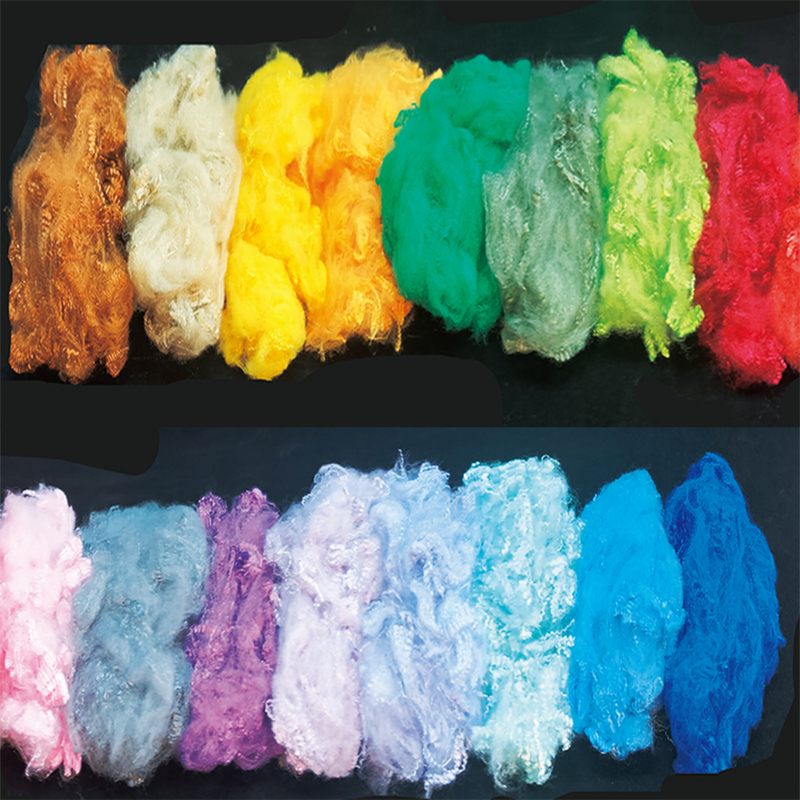
At first glance, the label 8D—10D/88 might seem to relate solely to fiber diameter specifications. 'D' represents denier, a unit of measure for the linear mass density of fibers. An 8D fiber, therefore, means it weighs eight grams per 9,000 meters. But when you dive deeper, the numbers alongside can indicate blends or unique manufacturing conditions specific to certain applications.
In the field, I've seen these fibers used in various applications—from lightweight outdoor fabrics to industrial-grade materials. The '88' could typically relate to additional classifiers such as batch numbers or finishing processes. In many cases, numbers like these help trace production specifics, ensuring consistency and quality across different production cycles.
For a company like Zhink New Material, understanding and utilizing these codes allows them to innovate by manipulating fiber aspects to enhance performance characteristics such as strength, stretchability, and thermal insulation.
Applications in Textile Production
From experience, when engaged in textile production, the choice of 8D—10D/88 fibers is pivotal, especially for high-performance textiles. During a project, we once opted for a similar fiber specification aiming to achieve a specific tactile smoothness. The result was quite compelling, allowing us to meet both aesthetic and practical requirements.
However, it's not always straightforward. Blending different fibers such as 8D or 10D with precise measurements demands an understanding of how each individual fiber behaves under stress and in diverse environmental conditions. Sometimes, initial trials do not meet the expected performance, necessitating further refinement.
This complexity is why partnerships with research-driven companies like Zhink, which places significant emphasis on R&D, are invaluable. They not only provide high-quality materials but also offer insight into optimizing material properties to meet specific needs.
The Challenges and Missteps
On more than one occasion, assuming that higher denier translates to better durability has led to oversights. In one case, implementing a 10D fiber instead of an 8D in a particular garment failed to deliver the expected levels of comfort and breathability.
Understanding the context and application is crucial. Denier is a helpful guide but is only part of the equation. The manufacturing process, environmental impact, and end-use should also guide decisions. Misjudgments often remind textile manufacturers of the importance of comprehensive testing.
The textile industry demands both precision and flexibility, making it important to continuously adapt and innovate. These experiences underscore the notion that continuous learning and adjusting to new information can significantly enhance project outcomes.
Successful Integrations and Innovations
On a brighter note, success stories abound where 8D—10D/88 fibers revolutionized product lines. There's an undeniable satisfaction when a product performs exceptionally in lab tests and exceeds market expectations. One successful application involved integrating these fibers into sportswear, where their properties provided superior stretch and moisture-wicking capabilities.
Feedback from professional athletes confirmed our hypotheses, leading to increased production. Seeing how well these materials perform in rigorous conditions fuels further exploration into their use. Companies like Zhink, with their focus on cutting-edge textile solutions, regularly push the boundaries of what's possible.
Industry advancements are often the result of such collaborations, where both R&D and real-world testing ensure products are not only functional but groundbreaking.
The Future of 8D—10D/88 in Textiles
As the textile industry evolves, the possibilities with 8D—10D/88 fibers continue to expand. We’re moving towards more sustainable and technologically advanced textiles. Imagine fibers that adjust to environmental conditions—recent projects hint at this being within reach.
With companies like SHANDONG ZHINK NEW MATERIAL CO., LTD at the helm of material innovation, we expect to see these trends accelerate. Visit Zhink's official website for more insights into their pioneering developments. Their expertise in new material production is setting new standards for the industry.
Ultimately, the future will be shaped by those who understand these materials' complexities and potential, driving innovation with a clear vision and a commitment to quality.
Related Products
Related Products