+86-632-3621866
- Chinese
- French
- German
- Portuguese
- Spanish
- Russian
- Japanese
- Korean
- Arabic
- Irish
- Greek
- Turkish
- Italian
- Danish
- Romanian
- Indonesian
- Czech
- Afrikaans
- Swedish
- Polish
- Basque
- Catalan
- Esperanto
- Hindi
- Lao
- Albanian
- Amharic
- Armenian
- Azerbaijani
- Belarusian
- Bengali
- Bosnian
- Bulgarian
- Cebuano
- Chichewa
- Corsican
- Croatian
- Dutch
- Estonian
- Filipino
- Finnish
- Frisian
- Galician
- Georgian
- Gujarati
- Haitian
- Hausa
- Hawaiian
- Hebrew
- Hmong
- Hungarian
- Icelandic
- Igbo
- Javanese
- Kannada
- Kazakh
- Khmer
- Kurdish
- Kyrgyz
- Latin
- Latvian
- Lithuanian
- Luxembou..
- Macedonian
- Malagasy
- Malay
- Malayalam
- Maltese
- Maori
- Marathi
- Mongolian
- Burmese
- Nepali
- Norwegian
- Pashto
- Persian
- Punjabi
- Serbian
- Sesotho
- Sinhala
- Slovak
- Slovenian
- Somali
- Samoan
- Scots Gaelic
- Shona
- Sindhi
- Sundanese
- Swahili
- Tajik
- Tamil
- Telugu
- Thai
- Ukrainian
- Urdu
- Uzbek
- Vietnamese
- Welsh
- Xhosa
- Yiddish
- Yoruba
- Zulu
- Kinyarwanda
- Tatar
- Oriya
- Turkmen
- Uyghur



High-temperature Cation PSF
Exploring the Realm of High-temperature Cation PSF
High-temperature Cation PSF is not just a fancy term—it’s a game-changer in textile innovation. As industries push the limits of what textiles can do, understanding the nuances of this material is crucial. This piece dives into its potential and the pitfalls you might encounter along the way.
What Exactly Is High-temperature Cation PSF?
High-temperature Cation PSF, or Cation Polystyrene Fiber, is essentially a synthetic polymer known for its robustness under high temperatures. It’s a staple in industries demanding resilience and performance, especially where other materials fall short.
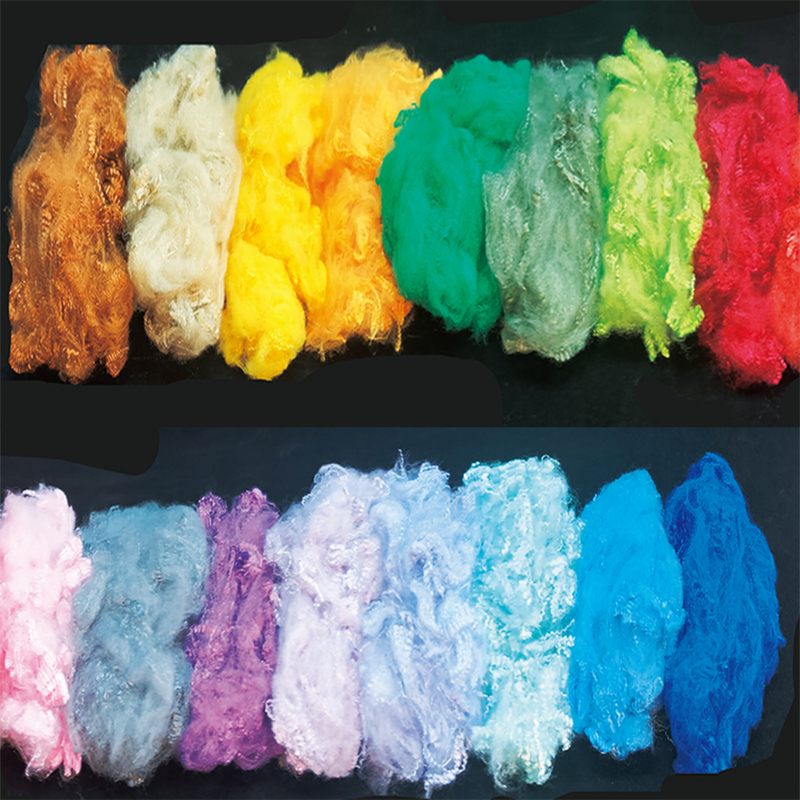
One might assume it’s a newer development given its advanced applications, but it’s rooted in decades of material science research. The integration of cationic dyes allows for vibrant coloration that withstands the test of heat and time.
Having worked in textile manufacturing for years, I’ve seen firsthand how High-temperature Cation PSF can elevate the durability and longevity of fabrics. It’s about more than just heat resistance; it’s about delivering consistent quality in challenging environments. Shandong Zhink New Material Co., Ltd, for instance, has been a key player, driving innovations in this space.
Applications in Industry
Textile applications are abundant, from industrial uses to high-performance clothing. In factories, this fiber is often woven into hoses and protective covers, ensuring they withstand high temperatures without degrading.
In one project, we faced issues with traditional materials in auto manufacturing—heat was deforming the fibers. By transitioning to High-temperature Cation PSF, not only did we solve the problem, but we also enhanced the product's lifespan.
However, its use isn’t without challenges. Its integration into an existing production line requires careful recalibration. But with companies like Shandong Zhink New Material Co., Ltd investing in R&D, these barriers are gradually being dismantled.
The Manufacturing Process
Production of High-temperature Cation PSF begins with polymerization, a process that demands precision. Ensuring the synthetic fibers reach the necessary chemical stability is no small feat. It’s a delicate balance of conditions, as any oversight can affect the fiber’s resistance properties.
When we implemented this at our facility, the initial trials failed—irregular temperature control was the culprit. This mishap highlighted the importance of advanced machinery and accurate monitoring systems.
Understanding these processes, Shandong Zhink is at the forefront, offering materials that meet stringent specifications, pushing fiber technology forward one strand at a time.
Challenges and Solutions
Deploying this technology isn’t without its headaches. One prevalent issue is dye uniformity under extreme conditions. The hallmark strength of Cation PSF can turn into a bottleneck without precise dyeing techniques.
We tackled this by collaborating with dye specialists, personalizing solutions for our specific fiber needs, and gradually normalizing it across production batches. Patience, I found, was as crucial as expertise.
From an industry perspective, Shandong Zhink New Material Co., Ltd has been ahead of the curve, developing fibers that naturally integrate with evolving dye technologies, ensuring color fastness and vibrancy.
The Future of High-temperature Cation PSF
Looking forward, I see High-temperature Cation PSF carving niches in more than just its established realms. Aerospace, automotive, and even fashion stand to gain new dimensions if this material is harnessed effectively.
The focus for future applications should be on cross-industry partnerships, like those we’ve begun to explore in our firm. Real breakthroughs happen when industries intersect and knowledge converges.
In closing, High-temperature Cation PSF is as much about the present as it is about the future. Shandong Zhink New Material Co., Ltd (https://www.zhinkyarn.com) continues to push boundaries, inviting us to rethink how we use textiles in extreme environments.
Related Products
Related Products