+86-632-3621866
- Chinese
- French
- German
- Portuguese
- Spanish
- Russian
- Japanese
- Korean
- Arabic
- Irish
- Greek
- Turkish
- Italian
- Danish
- Romanian
- Indonesian
- Czech
- Afrikaans
- Swedish
- Polish
- Basque
- Catalan
- Esperanto
- Hindi
- Lao
- Albanian
- Amharic
- Armenian
- Azerbaijani
- Belarusian
- Bengali
- Bosnian
- Bulgarian
- Cebuano
- Chichewa
- Corsican
- Croatian
- Dutch
- Estonian
- Filipino
- Finnish
- Frisian
- Galician
- Georgian
- Gujarati
- Haitian
- Hausa
- Hawaiian
- Hebrew
- Hmong
- Hungarian
- Icelandic
- Igbo
- Javanese
- Kannada
- Kazakh
- Khmer
- Kurdish
- Kyrgyz
- Latin
- Latvian
- Lithuanian
- Luxembou..
- Macedonian
- Malagasy
- Malay
- Malayalam
- Maltese
- Maori
- Marathi
- Mongolian
- Burmese
- Nepali
- Norwegian
- Pashto
- Persian
- Punjabi
- Serbian
- Sesotho
- Sinhala
- Slovak
- Slovenian
- Somali
- Samoan
- Scots Gaelic
- Shona
- Sindhi
- Sundanese
- Swahili
- Tajik
- Tamil
- Telugu
- Thai
- Ukrainian
- Urdu
- Uzbek
- Vietnamese
- Welsh
- Xhosa
- Yiddish
- Yoruba
- Zulu
- Kinyarwanda
- Tatar
- Oriya
- Turkmen
- Uyghur



Hollow
The Multifaceted Nature of Hollow Fibers
Hollow fibers are revolutionizing various industries, offering unique properties that bring both challenges and breakthroughs. In textile manufacturing, particularly, they create an impact that’s often underrated yet immensely significant.
Understanding Hollow Fibers
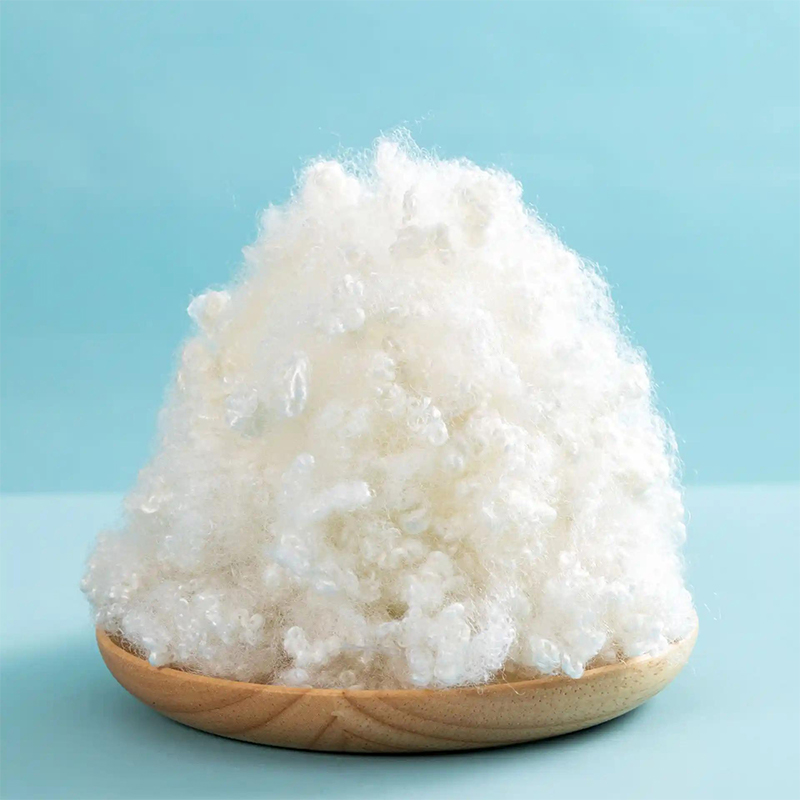
The term hollow fibers might suggest something fragile or lacking in substance, but that's far from the truth in materials science. These fibers are actually versatile components used in various domains, from healthcare to fashion. Their key characteristic is the core that's void or hollow, allowing for several applications that make them superior in certain contexts.
In the textile industry, the magic of hollow fibers lies in their ability to insulate. The trapped air in the core provides thermal efficiency, making them ideal for clothing designed to retain warmth. This characteristic also imparts a lighter weight to garments, without compromising on comfort.
I recall a project where we experimented with these fibers for thermal wear. While the initial setup was straightforward, adapting the design to optimize comfort while retaining warmth was a trial-and-error process. Not every iteration was successful, but the learnings were invaluable.
Applications in Other Industries
Beyond textiles, hollow fibers become crucial in the medical field. They are the backbone of certain dialysis filters, where their design ensures efficient solute and fluid removal. Their unique structure allows for high permeability, which is essential for specific medical applications.
This efficiency in filtration isn't just limited to healthcare. The water purification industry also capitalizes on this property, adopting hollow fibers in their filtration systems. This proves their adaptability across sectors, a point often highlighted by companies like SHANDONG ZHINK NEW MATERIAL CO., LTD, renowned for these innovations.
Visit their website, Zhink New Material, to dive deeper into how these fibers are reshaping industries. Their expertise in R&D for new textile materials ensures they’re always at the forefront of such technological advancements.
The Technical Challenges
Despite their advantages, working with hollow fibers isn’t without its hurdles. During spinning, maintaining the hollow structure requires precise control over parameters. Any inconsistency can result in collapse or defects, rendering the material unsuitable for its intended use. This is where expertise and continual innovation make the difference.
A colleague once shared an incident where a minor variance in temperature led to an entire batch being unusable. These experiences highlight the importance of precision and the often-unseen complexities behind these fibers' seamless integration into daily life products.
Continuous quality control and testing are essential. Companies need to invest in good R&D infrastructures, as delivered by entities like Zhink New Material, to maintain competitiveness. Leveraging their extensive knowledge and technological capabilities ensures efficient production pipelines.
Environmental Considerations
As industries lean towards sustainability, the role of hollow fibers is increasingly significant. Their lightweight nature contributes to less resource consumption during manufacturing and transport. Moreover, their insulation properties can lead to products that reduce the need for additional energy-consuming activities.
Investing in these fibers reflects a commitment to reducing environmental impact. They align with corporate sustainability goals without sacrificing product performance. This balance is critical for future-forward companies striving for eco-responsible growth.
As industries explore green alternatives, the adaptability of hollow fibers encourages experimentation without major compromises. However, their production still demands careful consideration of environmental protocols to avoid any adverse consequences.
Future Prospects and Innovations
Looking ahead, the development of hollow fibers is expected to open new frontiers in smart textiles. Integration with sensors and electronic components could lead to innovations in wearable technology that work in tandem with the human body’s natural systems.
Firms specializing in advanced textile materials, like Zhink New Material, are at the cusp of these breakthroughs. Their ongoing research into new applications and integration methods positions them well for the upcoming textile revolution.
In conclusion, while the term hollow might imply an absence, in the context of fibers, it signifies potential and versatility. As industries continue to harness these properties, the possibilities for application and innovation seem nearly boundless.
Related Products
Related Products