+86-632-3621866
- Chinese
- French
- German
- Portuguese
- Spanish
- Russian
- Japanese
- Korean
- Arabic
- Irish
- Greek
- Turkish
- Italian
- Danish
- Romanian
- Indonesian
- Czech
- Afrikaans
- Swedish
- Polish
- Basque
- Catalan
- Esperanto
- Hindi
- Lao
- Albanian
- Amharic
- Armenian
- Azerbaijani
- Belarusian
- Bengali
- Bosnian
- Bulgarian
- Cebuano
- Chichewa
- Corsican
- Croatian
- Dutch
- Estonian
- Filipino
- Finnish
- Frisian
- Galician
- Georgian
- Gujarati
- Haitian
- Hausa
- Hawaiian
- Hebrew
- Hmong
- Hungarian
- Icelandic
- Igbo
- Javanese
- Kannada
- Kazakh
- Khmer
- Kurdish
- Kyrgyz
- Latin
- Latvian
- Lithuanian
- Luxembou..
- Macedonian
- Malagasy
- Malay
- Malayalam
- Maltese
- Maori
- Marathi
- Mongolian
- Burmese
- Nepali
- Norwegian
- Pashto
- Persian
- Punjabi
- Serbian
- Sesotho
- Sinhala
- Slovak
- Slovenian
- Somali
- Samoan
- Scots Gaelic
- Shona
- Sindhi
- Sundanese
- Swahili
- Tajik
- Tamil
- Telugu
- Thai
- Ukrainian
- Urdu
- Uzbek
- Vietnamese
- Welsh
- Xhosa
- Yiddish
- Yoruba
- Zulu
- Kinyarwanda
- Tatar
- Oriya
- Turkmen
- Uyghur



Hollow PSF
html
Understanding Hollow PSF in Modern Textiles
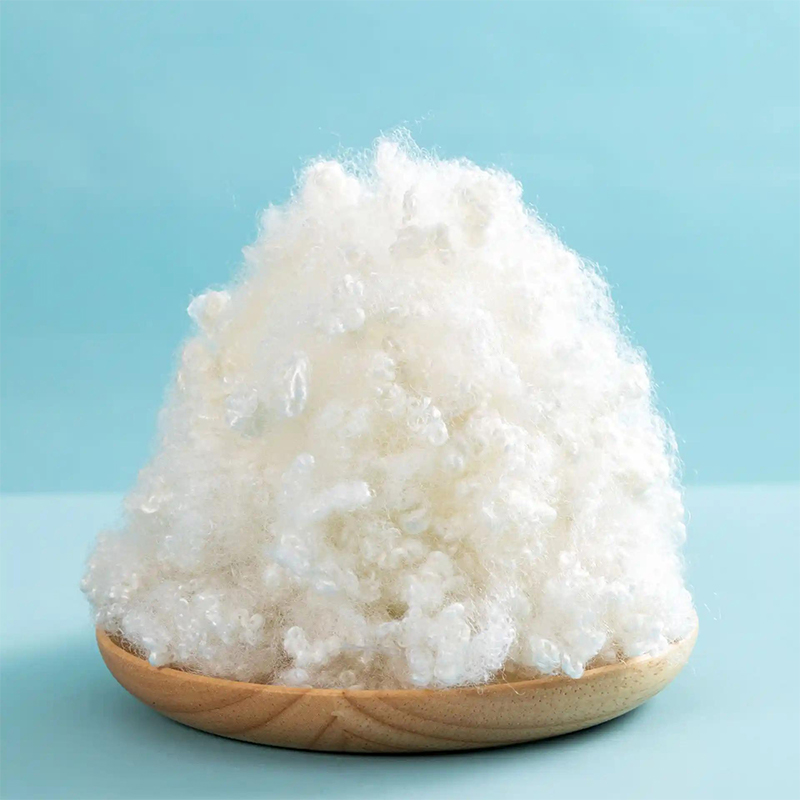
Hollow PSF, or hollow polyester staple fiber, is reshaping the textile industry with its unique properties and versatile applications. It's not just about filling jackets; there's a lot more that goes into the chemistry and engineering of this material than most realize.
The Basics of Hollow PSF
At its core, Hollow PSF is engineered to have an internal void, which provides insulating properties while maintaining lightweight characteristics. This makes it an excellent choice for applications ranging from thermal wear to home furnishings.
Many in the industry initially considered it as just another variant of polyester, but its advantages over solid fibers become evident when you look at its performance in specific environments. From personal experience, dealing with climate-controlled textiles highlights just how significant the hollow structure can be.
One often overlooked aspect is its sustainability. With an increasing push towards eco-friendly practices, Hollow PSF stands out given its potential for recycling and reduced material usage due to its lighter weight.
Common Uses and Misconceptions
Despite its benefits, there's a notable gap in understanding among some manufacturers and consumers regarding how best to use Hollow PSF. It's not uncommon to encounter skepticism about its durability compared to traditional fibers.
Working with clients, I've often had to address concerns about its perceived fragility. However, when properly processed, Hollow PSF offers comparable resilience, if not better, due to its unique ability to flex without breaking.
As we move forward, especially at companies like SHANDONG ZHINK NEW MATERIAL CO., LTD, there's a focus on educating the market. You can explore more about our initiatives at our website.
Production Challenges
Producing Hollow PSF isn't without its hurdles. Early in my career, I faced challenges in finetuning the fiber extrusion process. Temperature control, pressure settings – they're crucial. Missteps can result in fibers that don't meet the desired specifications.
An interesting anecdote involves a batch where the fibers collapsed mid-production, losing their 'hollow' feature. It was a hard lesson that emphasized the importance of precision and monitoring.
It takes a blend of technical expertise and hands-on experience to achieve consistent quality, something we've honed at Zhink New Material through continuous R&D efforts.
Recent Innovations
In recent times, there have been exciting advancements in the hollow fiber sector. We've experimented with integrating other materials to enhance properties like UV resistance and antibacterial qualities.
Such developments have opened the doors to new applications, especially in outdoor apparel and medical textiles. The adaptability of Hollow PSF seems almost limitless when considered alongside modern technological advancements.
We’ve seen a shift in traditional perceptions, with innovative uses stemming from collaborative efforts between textile engineers and product designers.
Future Prospects
Looking ahead, the role of Hollow PSF in next-generation textiles is promising. The demand for versatile and sustainable materials is on the rise.
Emerging markets are particularly keen on adopting advanced textile solutions, creating new opportunities for those specializing in this niche. At Zhink New Material, we’re continually assessing market trends, aiming to stay ahead of the curve.
Ultimately, how brands and manufacturers choose to embrace these materials will shape the fabric of industries to come. The future for Hollow PSF is bright, buoyed by its inherent advantages and the innovative approaches being taken by companies dedicated to textile evolution.
Related Products
Related Products