
+86-632-3621866
- Chinese
- French
- German
- Portuguese
- Spanish
- Russian
- Japanese
- Korean
- Arabic
- Irish
- Greek
- Turkish
- Italian
- Danish
- Romanian
- Indonesian
- Czech
- Afrikaans
- Swedish
- Polish
- Basque
- Catalan
- Esperanto
- Hindi
- Lao
- Albanian
- Amharic
- Armenian
- Azerbaijani
- Belarusian
- Bengali
- Bosnian
- Bulgarian
- Cebuano
- Chichewa
- Corsican
- Croatian
- Dutch
- Estonian
- Filipino
- Finnish
- Frisian
- Galician
- Georgian
- Gujarati
- Haitian
- Hausa
- Hawaiian
- Hebrew
- Hmong
- Hungarian
- Icelandic
- Igbo
- Javanese
- Kannada
- Kazakh
- Khmer
- Kurdish
- Kyrgyz
- Latin
- Latvian
- Lithuanian
- Luxembou..
- Macedonian
- Malagasy
- Malay
- Malayalam
- Maltese
- Maori
- Marathi
- Mongolian
- Burmese
- Nepali
- Norwegian
- Pashto
- Persian
- Punjabi
- Serbian
- Sesotho
- Sinhala
- Slovak
- Slovenian
- Somali
- Samoan
- Scots Gaelic
- Shona
- Sindhi
- Sundanese
- Swahili
- Tajik
- Tamil
- Telugu
- Thai
- Ukrainian
- Urdu
- Uzbek
- Vietnamese
- Welsh
- Xhosa
- Yiddish
- Yoruba
- Zulu
- Kinyarwanda
- Tatar
- Oriya
- Turkmen
- Uyghur



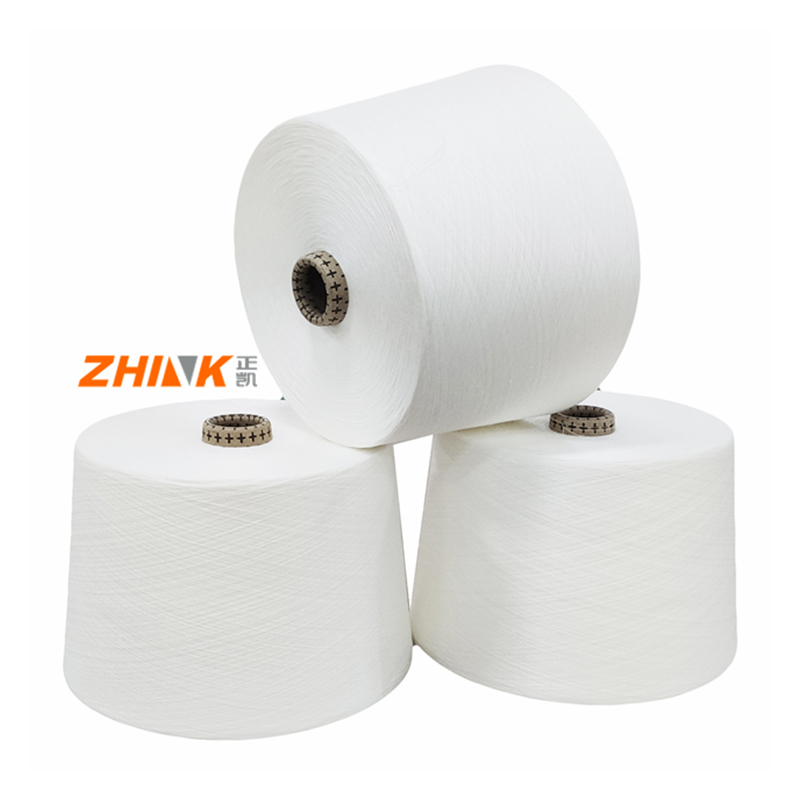
Modal blended yarn for weaving
The Intricacies of Modal Blended Yarn in Weaving
Diving into the world of Modal blended yarn for weaving, one quickly realizes the immense potential and challenges these fibers bring. They offer versatility and durability, yet even seasoned professionals occasionally stumble over the nuances of blending and weaving them correctly.
Understanding Modal's Unique Properties
Modal, derived from beech tree cellulose, is renowned for its soft texture and high tensile strength. These attributes make it a desirable choice in the textile industry, especially when blended with other fibers. Still, achieving the perfect blend requires a deep understanding of each component's behavior under different weaving conditions.
One common misstep happens when manufacturers assume that the natural properties of Modal blended yarn automatically imply high-quality end products. In reality, the blending ratio can dramatically impact texture and durability. It’s crucial to test different combinations to find the sweet spot that aligns with the intended use of the fabric.
Furthermore, the finishing process plays a significant role. Modal's absorbency is both a blessing and a curse—it readily dyes beautifully but can also lead to shrinkage if not handled properly. Hence, a careful approach towards finishing is essential, preventing post-production surprises.
Experiments in Blending Modal and Cotton
In one of my early projects at SHANDONG ZHINK NEW MATERIAL CO., LTD, we ventured into blending Modal with cotton. Our goal was to enhance breathability while retaining the softness of Modal. Initially, our trials showed promise, but some batches experienced unexpected pilling after limited washes, a scenario we hadn't anticipated.
This led us back to the drawing board. Our solution lay in adjusting the spinning process and inspecting the cotton quality—key factors we had underestimated. The fibers needed better cohesion for resilience, which required tweaking the spinning speed and tension.
These adjustments resulted in a remarkably resilient fabric, sturdy yet soft, an embodiment of what we aimed to achieve. This experience underscored the importance of revisiting foundational aspects whenever new issues arise, rather than jumping to conclusions.
The Role of Technology in Modern Weaving
Technology has dramatically altered the landscape of Modal blended yarn production. Automated weaving machines now allow precise control over tension and speed, minimizing human error that once plagued manual processes.
At Zhink New Material, we leverage state-of-the-art machinery that interfaces with our custom software. This setup aids real-time monitoring, ensuring each batch maintains consistency—a critical factor in commercial scalability.
Yet, technology isn't infallible. We've encountered instances where machine calibration issues led to faulty batches. These hiccups fortified our belief that a balance of automated precision and human oversight optimizes quality control.
Bamboo and Modal: A Harmony of Yarn
An intriguing blend involves bamboo and Modal, marrying sustainability with unparalleled fabric softness. Bamboo's natural antibacterial properties complement Modal’s moisture-wicking abilities, creating textiles that are not just comfortable but also functional.
Our explorations at Zhink revealed that the blend ratio significantly impacts the final product's eco-friendly claims. A higher bamboo content obviously yields more sustainable textiles, which is vital in today's environmentally-conscious market.
This sustainable angle aligns with our ethos at SHANDONG ZHINK NEW MATERIAL CO., LTD. We continuously experiment to refine these blends, ensuring they meet both our quality standards and environmental commitments, as reflected on our website, Zhink New Material.
Challenges in the Production Process
Producing Modal blended yarn isn't without its hurdles. A critical challenge is maintaining consistency across large production volumes. Each step, from raw material selection to post-processing, requires meticulous attention to detail.
We've encountered issues with raw material variability. Even minor deviations in fiber quality can lead to significant variations in the end product. Implementing a rigorous quality assurance process proved essential, catching inconsistencies before they affected the final output.
Our experiences reiterate that, despite advancements, the weaving industry's foundation remains rooted in careful material science. It's a dance between innovation and tradition, where success lies in mastering both.
Related Products
Related Products

Best Selling Products
Best Selling Products-
 Linen Blended Yarn
 -
 Hollow polyester yarn
 -
 Combed Cotton Blended Yarn
 -
 Flame retardant polyester spun yarn
 -
 Polyester blended yarn
 -
 RAW WHITE POLYESTER FIBER
 -
 Wool & Cashmere Blended Yarn
 -
 Flame retardant acrylic yarn
 -
 Recycled polyester spun yarn
 -
 COLORED POLYESTER FIBER
 -
 Lyocell Blended Yarn
 -
 100% Modal Yarn