
+86-632-3621866
- Chinese
- French
- German
- Portuguese
- Spanish
- Russian
- Japanese
- Korean
- Arabic
- Irish
- Greek
- Turkish
- Italian
- Danish
- Romanian
- Indonesian
- Czech
- Afrikaans
- Swedish
- Polish
- Basque
- Catalan
- Esperanto
- Hindi
- Lao
- Albanian
- Amharic
- Armenian
- Azerbaijani
- Belarusian
- Bengali
- Bosnian
- Bulgarian
- Cebuano
- Chichewa
- Corsican
- Croatian
- Dutch
- Estonian
- Filipino
- Finnish
- Frisian
- Galician
- Georgian
- Gujarati
- Haitian
- Hausa
- Hawaiian
- Hebrew
- Hmong
- Hungarian
- Icelandic
- Igbo
- Javanese
- Kannada
- Kazakh
- Khmer
- Kurdish
- Kyrgyz
- Latin
- Latvian
- Lithuanian
- Luxembou..
- Macedonian
- Malagasy
- Malay
- Malayalam
- Maltese
- Maori
- Marathi
- Mongolian
- Burmese
- Nepali
- Norwegian
- Pashto
- Persian
- Punjabi
- Serbian
- Sesotho
- Sinhala
- Slovak
- Slovenian
- Somali
- Samoan
- Scots Gaelic
- Shona
- Sindhi
- Sundanese
- Swahili
- Tajik
- Tamil
- Telugu
- Thai
- Ukrainian
- Urdu
- Uzbek
- Vietnamese
- Welsh
- Xhosa
- Yiddish
- Yoruba
- Zulu
- Kinyarwanda
- Tatar
- Oriya
- Turkmen
- Uyghur



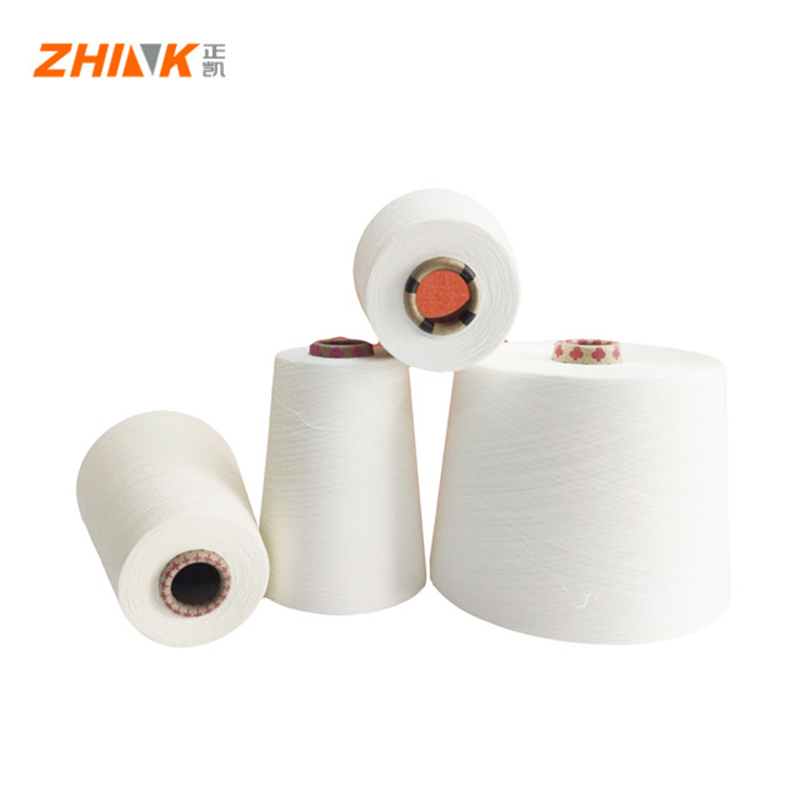
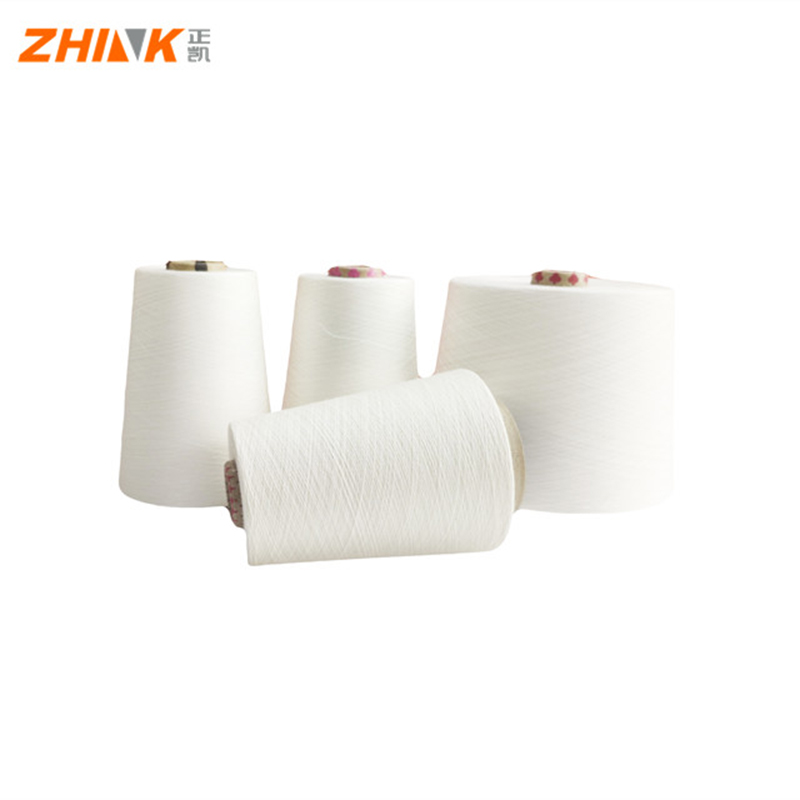
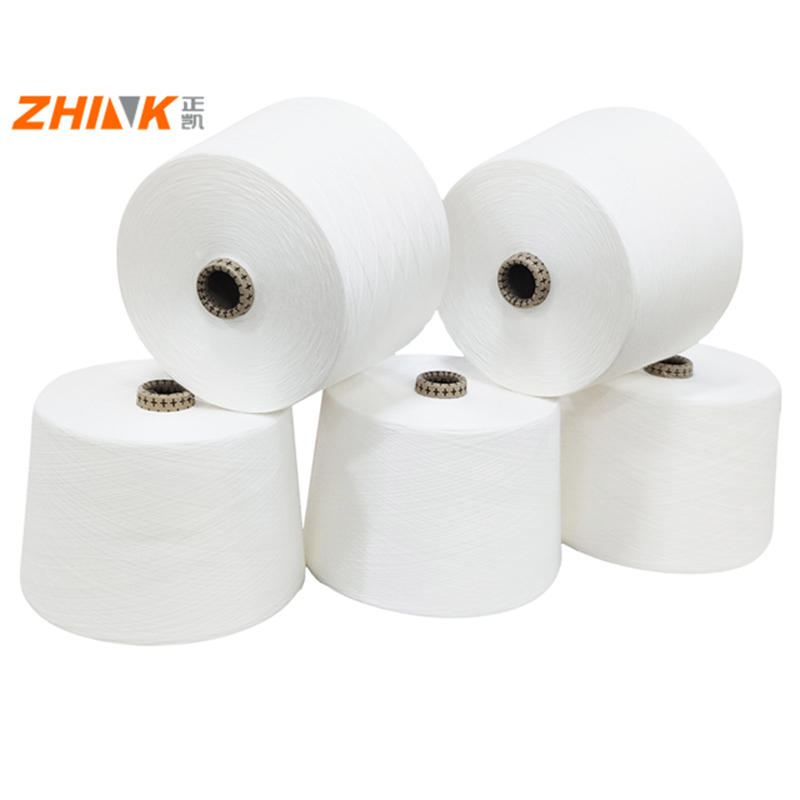
polyester/Combed cotton vortex yarn
Understanding Polyester/Combed Cotton Vortex Yarn
In the realm of textiles, the combination of polyester and combed cotton vortex yarn offers a unique blend of durability and comfort. Many in the industry, however, have misconceptions about its real-world application. Let’s delve into the nuances of this blend based on hands-on experience and common challenges.
The Basics of Polyester/Combed Cotton Blends
When we talk about blending polyester with combed cotton, the immediate thought is the balance of structure and softness. Polyester brings strength and wrinkle resistance, while combed cotton enhances softness and breathability. But selecting the right vortex yarn for specific applications isn't always straightforward.
From my work with SHANDONG ZHINK NEW MATERIAL CO., LTD, I’ve observed how crucial the spinning technique is. Vortex spinning, in particular, contributes to the fabric’s smooth finish. It's like baking; the right method ensures the desired texture.
Many new manufacturers overlook the variance in yarn diameter, leading to unexpected dye absorption rates. I once had a batch turn out uneven, resembling a botched paint job. Exploring these details helps avert costly mistakes.
Vortex Yarn's Unseen Challenges
While vortex yarn is praised for its minimal pilling, not all blends are created equal. I recall a client with exacting standards for sportswear fabric. Here, the challenge was ensuring longevity without pilling, as polyester tends to increase the pilling when not properly managed in the blend.
Another issue often encountered is the environmental concern—balancing synthetic polyester with natural cotton must reflect sustainable practices. At Zhink New Material, we continuously research methods of production that reduce energy consumption and waste.
This sustainable focus also impacts the cost. Customers sometimes balk at higher costs, unaware of the resources saved long-term. It’s crucial to communicate these benefits clearly, emphasizing the product lifecycle.
The Role of SHANDONG ZHINK NEW MATERIAL CO., LTD
On the practical side, SHANDONG ZHINK excels in anticipating industry shifts due to our deep-rooted experience with textile innovations. Our website, Zhink Yarn, is a resource for understanding market trends, particularly in yarn technology.
Noteworthy is our ability to pivot with technological advances, adapting to consumer needs. The push for eco-friendly variants has driven us to develop products with reduced water usage and biodegradable components.
At Zhink, we constantly engage in R&D to trailblaze in this area, creating yarns that enhance fabric quality while being environmentally mindful.
Innovations in Yarn Manufacturing
Vortex yarn technology itself is a world of innovation. The process involves air-jet spinning, which intricately wraps fibers in a way that reduces hairiness. This isn’t just about aesthetics; it translates to a cooler touch and better moisture management.
I’ve seen clients in humid regions particularly appreciate these characteristics, leading to increased demand for leisure and activewear lines. This yarn keeps the consumer comfortable and the garment looking fresh longer.
However, innovation doesn’t mean blindly adopting every new technology. It’s about discerning which developments truly offer value. This trial-and-error approach is foundational at Zhink, guiding the production and refinement process continuously.
The Personal Touch: Crafting the Right Mix
Creating the perfect polyester/combed cotton vortex yarn is akin to an art form. Every textile engineer has their “recipe” built from experience. My approach often involves prototyping small batches, manually testing various blends for durability and feel.
Feedback is integral. Whether it’s consumer reports or field tests, these insights shape adjustments. A memorable project involved producing yarn for baby clothes; softness was paramount, necessitating extra combing stages.
Ultimately, the world of polyester/combed cotton vortex yarn is vast and nuanced. Each thread tells a story of innovation, problem-solving, and dedication to quality—reflected in both the process and the final product.
Related Products
Related Products

Best Selling Products
Best Selling Products

Related Search
Related Search- poly viscose yarn
- recycled polyester/wool blended yarn
- bamboo/Combed cotton blended yarn
- 100% Hollow polyester MVS
- A100/POLYESTER/WOOL 50/28/22 siro compact yarn
- 16s Flame retardant polyester yarn
- Recycled polyester/bamboo blended yarn
- Recycled polyester/Modal blended yarn
- low melt polyester staple fiber
- polyester/Lyocell 65/35 yarn