
+86-632-3621866
- Chinese
- French
- German
- Portuguese
- Spanish
- Russian
- Japanese
- Korean
- Arabic
- Irish
- Greek
- Turkish
- Italian
- Danish
- Romanian
- Indonesian
- Czech
- Afrikaans
- Swedish
- Polish
- Basque
- Catalan
- Esperanto
- Hindi
- Lao
- Albanian
- Amharic
- Armenian
- Azerbaijani
- Belarusian
- Bengali
- Bosnian
- Bulgarian
- Cebuano
- Chichewa
- Corsican
- Croatian
- Dutch
- Estonian
- Filipino
- Finnish
- Frisian
- Galician
- Georgian
- Gujarati
- Haitian
- Hausa
- Hawaiian
- Hebrew
- Hmong
- Hungarian
- Icelandic
- Igbo
- Javanese
- Kannada
- Kazakh
- Khmer
- Kurdish
- Kyrgyz
- Latin
- Latvian
- Lithuanian
- Luxembou..
- Macedonian
- Malagasy
- Malay
- Malayalam
- Maltese
- Maori
- Marathi
- Mongolian
- Burmese
- Nepali
- Norwegian
- Pashto
- Persian
- Punjabi
- Serbian
- Sesotho
- Sinhala
- Slovak
- Slovenian
- Somali
- Samoan
- Scots Gaelic
- Shona
- Sindhi
- Sundanese
- Swahili
- Tajik
- Tamil
- Telugu
- Thai
- Ukrainian
- Urdu
- Uzbek
- Vietnamese
- Welsh
- Xhosa
- Yiddish
- Yoruba
- Zulu
- Kinyarwanda
- Tatar
- Oriya
- Turkmen
- Uyghur


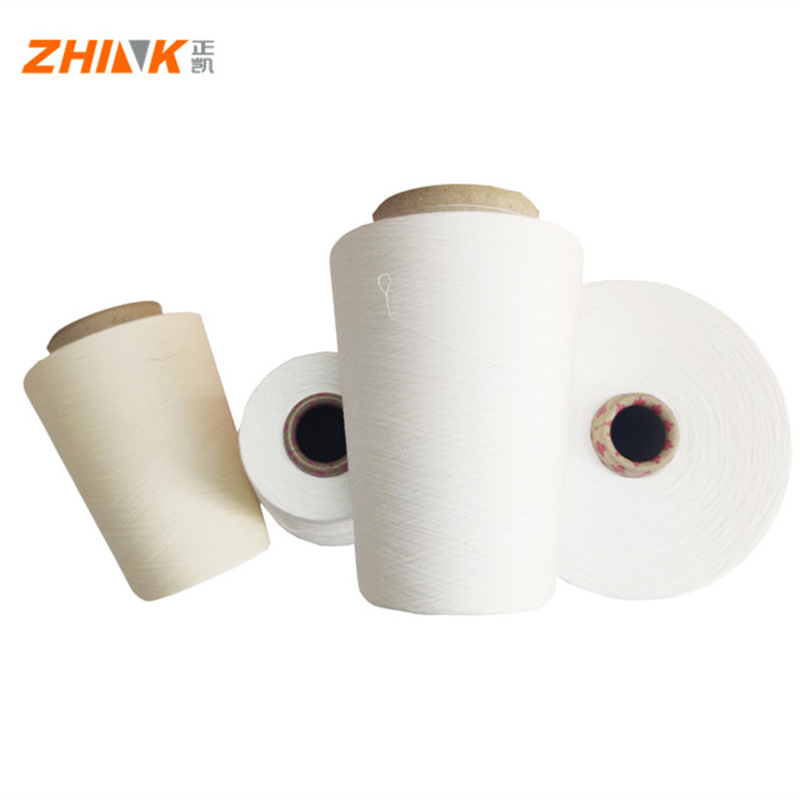
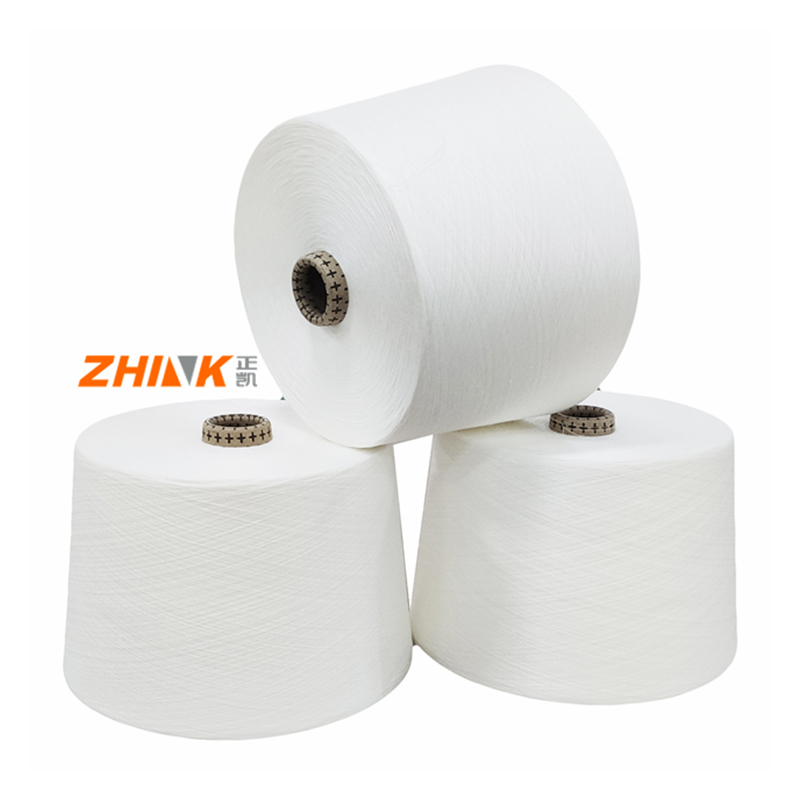
Recycled polyester/bamboo vortex yarn
The Art and Science of Recycled Polyester/Bamboo Vortex Yarn
Delving into the world of sustainable textiles can often feel like walking a tightrope between innovation and practicality. One particularly intriguing player is the recycled polyester/bamboo vortex yarn, a blend that seeks to balance environmental responsibility with textile performance. What does it really take to bring such a yarn to market, and what are the challenges faced by companies like SHANDONG ZHINK NEW MATERIAL CO., LTD?
Understanding the Components
The beauty of recycled polyester lies in its circular approach. It's crafted from post-consumer plastic wastes like bottles, offering a second life to what might otherwise be landfill-bound. But the journey from bottle to yarn is anything but straightforward. Quality control is paramount, with each stage demanding precision to ensure the resulting yarn retains the necessary strength and versatility for textile applications.
Bamboo fibers, meanwhile, are celebrated for their natural properties—antibacterial, moisture-wicking, and surprisingly soft. Yet, processing bamboo into a form that's compatible with polyester requires a nuanced approach. Achieving the right blend ratio to maximize both materials' benefits involves more than just technical knowledge; it demands a sensitivity to the textiles' potential applications.
Enter the vortex spinning technology—a cutting-edge method that, through high-speed rotary nozzles, produces a yarn that's more consistent and less prone to hairiness. This technique is perfect for blending bamboo and recycled polyester, enhancing both fibers' inherent qualities.
From Lab to Production
For companies like Zhink New Material (https://www.zhinkyarn.com), making the leap from R&D to full-scale production isn't just about scaling up. It's about translating intricate lab results into reliable, manufacturable processes. Oftentimes, trial runs reveal unforeseen issues. Perhaps the blend ratio needs tweaking, or adjustments in spinning speed are required to handle unexpected inconsistencies.
Every batch is an iteration, a slightly different interpretation of the original recipe. Here, practical experience is invaluable; what works on paper might not translate neatly under production line pressures. It's a dance between machinery settings and material characteristics, with market demands ever in the background.
Moreover, testing isn't a static phase but a continuous process. Each batch might have unique traits, necessitating constant vigilance to maintain quality. For those in the industry, the ability to pivot swiftly when things veer off-course is crucial.
Sustainability Credentials
Aligning innovation with ecological consciousness is a cornerstone for Zhink New Material. Their commitment to sustainable practices is not just a marketing checkbox but a core operational ethos. From sourcing to final yarn production, each step is scrutinized for environmental impact.
But it's not enough to simply proclaim sustainability. The company invests heavily in traceability, ensuring every element of their bamboo vortex yarn can be tracked back to its roots, quite literally in some cases. Transparency here isn't just a selling point; it's a trust-building exercise with licensors and consumers alike.
This approach not only resonates with the eco-conscious market but fosters innovation, pushing for greener alternatives across the production process. As environmental standards tighten worldwide, pioneers in sustainable materials continue to adapt, staying ahead of regulatory demands while fulfilling their ecological promises.
Market Reception and Challenges
While the sustainable story is compelling, market reception varies. Not every consumer is immediately receptive to textiles crafted from recycled or unconventional materials. Education plays a significant role—brands and suppliers alike must bridge knowledge gaps, elucidating why these textiles are not just environmentally beneficial but also high-performing.
Price points can also be a sticking factor. While the long-term benefits of sustainable textiles far outweigh initial costs, upfront pricing remains a barrier for some market segments. Here, businesses navigate consumer psychology, balancing education with incentive-driven strategies.
Ultimately, patience and persistence pay off. As awareness grows and economies of scale kick in, the industry gradually shifts, paving the way for broader acceptance and growth in sustainable textile offerings.
Futures and Innovations
Looking ahead, companies like SHANDONG ZHINK NEW MATERIAL CO., LTD are poised at the frontier of textile innovation. Next-generation solutions may lie in even more exotic blends or entirely new technologies that further reduce resource usage.
The potential to expand into related markets or develop new product lines using similar sustainability principles offers exciting possibilities. From sportswear to high-fashion, the applications for recycled polyester/bamboo vortex yarn are as varied as they are inspiring.
As the textile industry continues its transformational journey, the intersection of innovation and sustainability will undoubtedly unfold in fascinating ways, spearheaded by those daring enough to push boundaries.
Related Products
Related Products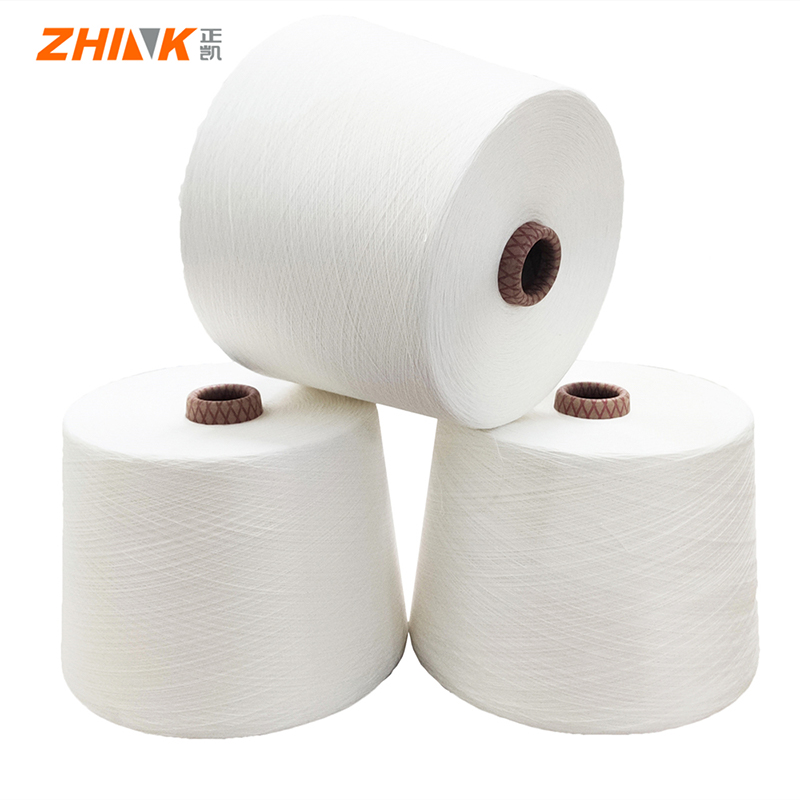

Best Selling Products
Best Selling Products


Related Search
Related Search- Recycled polyester/bamboo 65/35 yarn
- 100% Solid acrylic siro compact
- Flame retardant acrylic TFO yarn
- low melt polyester staple fiber
- Solid acrylic yarn for knitting
- Irregular Cross-section and Functional fiber
- cotton linen blend yarn
- Wool blended yarn for knitting
- Flame retardant acrylic/viscose mvs yarn
- Recycled polyester short fiber yarn