+86-632-3621866
- Chinese
- French
- German
- Portuguese
- Spanish
- Russian
- Japanese
- Korean
- Arabic
- Irish
- Greek
- Turkish
- Italian
- Danish
- Romanian
- Indonesian
- Czech
- Afrikaans
- Swedish
- Polish
- Basque
- Catalan
- Esperanto
- Hindi
- Lao
- Albanian
- Amharic
- Armenian
- Azerbaijani
- Belarusian
- Bengali
- Bosnian
- Bulgarian
- Cebuano
- Chichewa
- Corsican
- Croatian
- Dutch
- Estonian
- Filipino
- Finnish
- Frisian
- Galician
- Georgian
- Gujarati
- Haitian
- Hausa
- Hawaiian
- Hebrew
- Hmong
- Hungarian
- Icelandic
- Igbo
- Javanese
- Kannada
- Kazakh
- Khmer
- Kurdish
- Kyrgyz
- Latin
- Latvian
- Lithuanian
- Luxembou..
- Macedonian
- Malagasy
- Malay
- Malayalam
- Maltese
- Maori
- Marathi
- Mongolian
- Burmese
- Nepali
- Norwegian
- Pashto
- Persian
- Punjabi
- Serbian
- Sesotho
- Sinhala
- Slovak
- Slovenian
- Somali
- Samoan
- Scots Gaelic
- Shona
- Sindhi
- Sundanese
- Swahili
- Tajik
- Tamil
- Telugu
- Thai
- Ukrainian
- Urdu
- Uzbek
- Vietnamese
- Welsh
- Xhosa
- Yiddish
- Yoruba
- Zulu
- Kinyarwanda
- Tatar
- Oriya
- Turkmen
- Uyghur


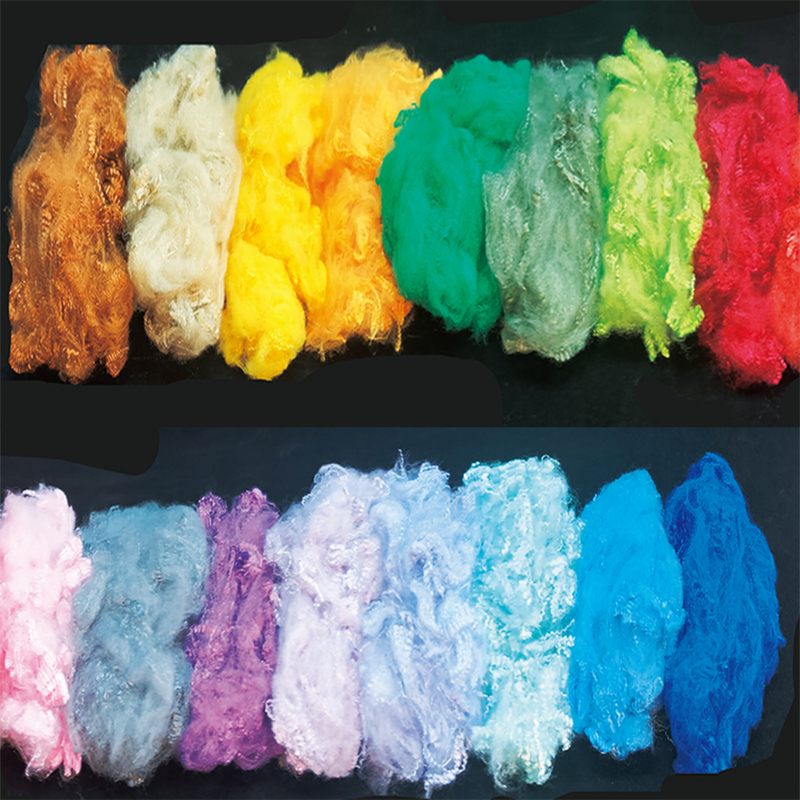
recycled polyester staple fiber
Understanding Recycled Polyester Staple Fiber
Recycled polyester staple fiber is gaining traction in the textile industry. Although touted as a sustainable solution, it often comes with misconceptions that need addressing. This fiber type, made from recycled plastics, offers numerous benefits but also challenges that require careful management.
The Basics of Recycled Polyester Staple Fiber
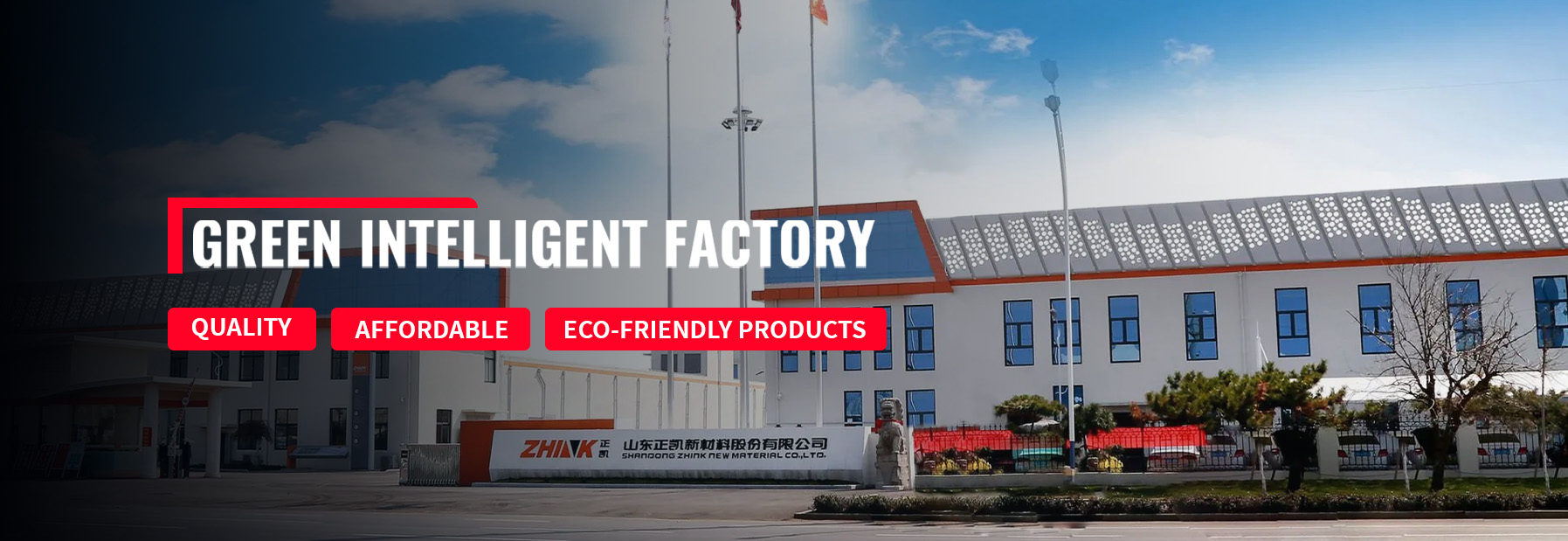
At its core, recycled polyester staple fiber (RPSF) is made by collecting and recycling PET bottles and other plastic waste. A common misconception is that this process might compromise quality. However, with advanced technologies such as those employed by companies like SHANDONG ZHINK NEW MATERIAL CO., LTD, quality is well-maintained. Their R&D efforts focus on enhancing fiber characteristics to meet industry demands.
One practical example from my experience involves incorporating RPSF into various fabric blends. The real challenge here often lies in ensuring consistency. Variations in recycled materials can affect fiber quality, so stringent quality checks are vital. Companies like Zhink New Material, found at their website, lead the way by implementing rigorous testing protocols.
In terms of sustainability, using recycled fibers helps reduce reliance on virgin polyester, cutting down on environmental impact. But it’s not just about replacing virgin materials; it’s about transforming how the industry thinks about waste and product life cycles.
Industrial Applications and Practical Challenges
The applications for recycled polyester staple fiber are vast, covering everything from garments to home textiles. Yet, integrating RPSF into production isn’t always straightforward. One issue is adapting existing machinery to handle different fiber characteristics. I’ve seen situations where minor tweaks in machinery settings lead to significant efficiency improvements.
From an on-the-ground perspective, the transition to RPSF can involve a learning curve for manufacturers. For some, finding the right balance between cost-effectiveness and maintaining fiber integrity is crucial. Maintenance becomes a strategy, not just an afterthought.
Despite these challenges, RPSF applications are expanding. Its use in producing high-performance outdoor apparel is particularly promising. With continuous R&D, such as Zhink New Material’s initiatives, enhanced RPSF products are becoming viable for even the most demanding applications.
Environmental Impact Considerations
Switching to recycled polyester staple fiber addresses several environmental concerns. Strategically, it helps divert plastic waste from landfills and oceans. However, while the environmental benefits are clear, lifecycle analysis is important to understand the broader implications.
I recall a project where explicit goals were set to reduce carbon footprint through materials selection. The role of RPSF was pivotal in achieving these aims. Companies like Zhink New Material contribute significantly by providing sustainably sourced materials that meet stringent environmental standards.
But it’s crucial to remember, sustainability is a continuous journey. Even with recycled materials, energy consumption in manufacturing processes needs ongoing assessment to truly claim eco-friendliness.
The Role of Advanced Technology
Emerging technologies spearhead improvements in recycled polyester staple fiber production. Innovations in chemical processing and fiber extrusion are particularly noteworthy. At Zhink New Material’s facilities, state-of-the-art technology ensures top-notch product outcomes. Their methods serve as models for others attempting to innovate within this space.
Hands-on experience often reveals that the technical know-how to upgrade production lines is pivotal. It’s not just about investing in new machines but optimizing existing processes. This can lead to not only better product quality but also cost savings.
Technology also plays a crucial role in enhancing the recyclability of polyester products themselves, leading to a more circular economy approach in the textile sector. Adaptation and continuous improvement remain key themes.
Market Outlook and Future Prospects
The market for recycled polyester staple fiber shows strong growth potential. Consumer awareness and demand for sustainable products drive this expansion. Companies like SHANDONG ZHINK NEW MATERIAL CO., LTD are well-positioned to capitalize on this demand due to their commitment to quality and innovation.
For businesses engaging with RPSF, it’s essential to build not just capability but credibility. Transparency in sourcing and processes can enhance brand trust. From firsthand experience, forging partnerships with suppliers who share similar values can significantly improve market position.
Looking ahead, the integration of smart technologies with sustainable practices could redefine the industry. It will rely heavily on industry collaboration, driven by a collective push towards eco-responsibility. The synergy between technology, sustainability, and market demands is where the future of textiles lies.
Related Products
Related Products