+86-632-3621866
- Chinese
- French
- German
- Portuguese
- Spanish
- Russian
- Japanese
- Korean
- Arabic
- Irish
- Greek
- Turkish
- Italian
- Danish
- Romanian
- Indonesian
- Czech
- Afrikaans
- Swedish
- Polish
- Basque
- Catalan
- Esperanto
- Hindi
- Lao
- Albanian
- Amharic
- Armenian
- Azerbaijani
- Belarusian
- Bengali
- Bosnian
- Bulgarian
- Cebuano
- Chichewa
- Corsican
- Croatian
- Dutch
- Estonian
- Filipino
- Finnish
- Frisian
- Galician
- Georgian
- Gujarati
- Haitian
- Hausa
- Hawaiian
- Hebrew
- Hmong
- Hungarian
- Icelandic
- Igbo
- Javanese
- Kannada
- Kazakh
- Khmer
- Kurdish
- Kyrgyz
- Latin
- Latvian
- Lithuanian
- Luxembou..
- Macedonian
- Malagasy
- Malay
- Malayalam
- Maltese
- Maori
- Marathi
- Mongolian
- Burmese
- Nepali
- Norwegian
- Pashto
- Persian
- Punjabi
- Serbian
- Sesotho
- Sinhala
- Slovak
- Slovenian
- Somali
- Samoan
- Scots Gaelic
- Shona
- Sindhi
- Sundanese
- Swahili
- Tajik
- Tamil
- Telugu
- Thai
- Ukrainian
- Urdu
- Uzbek
- Vietnamese
- Welsh
- Xhosa
- Yiddish
- Yoruba
- Zulu
- Kinyarwanda
- Tatar
- Oriya
- Turkmen
- Uyghur


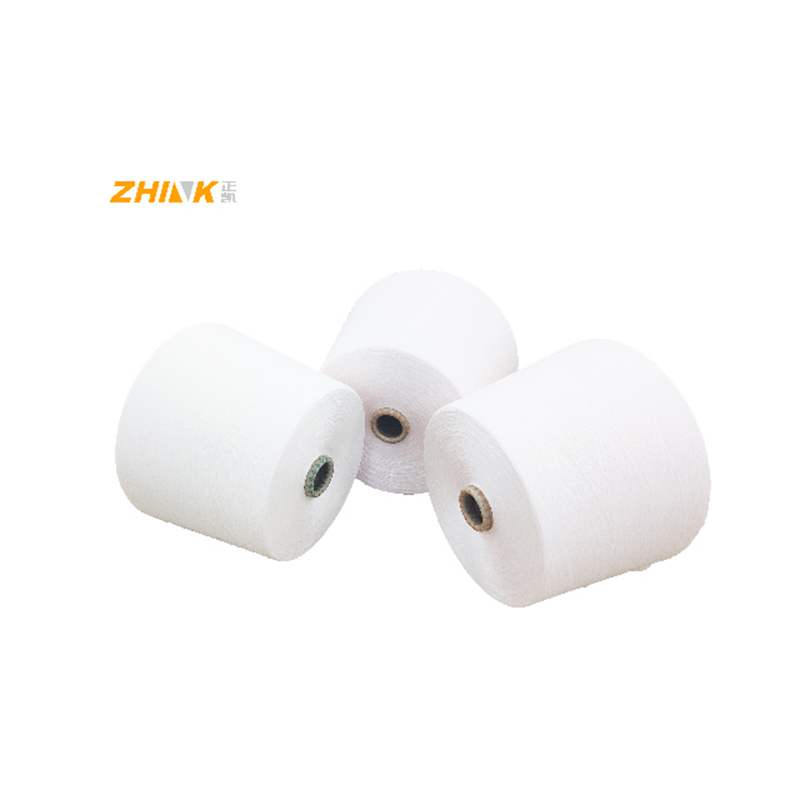
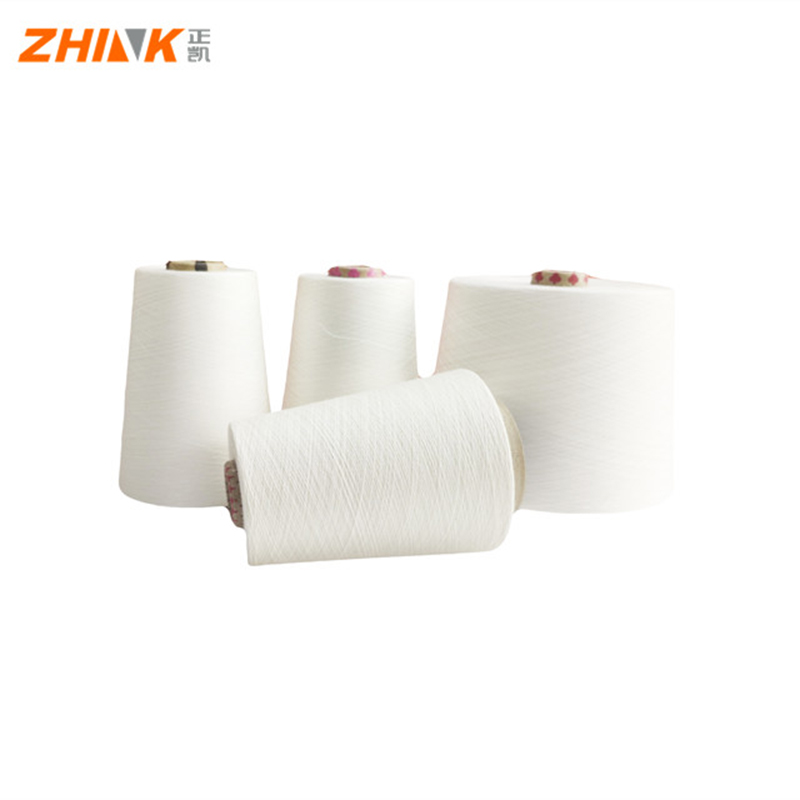
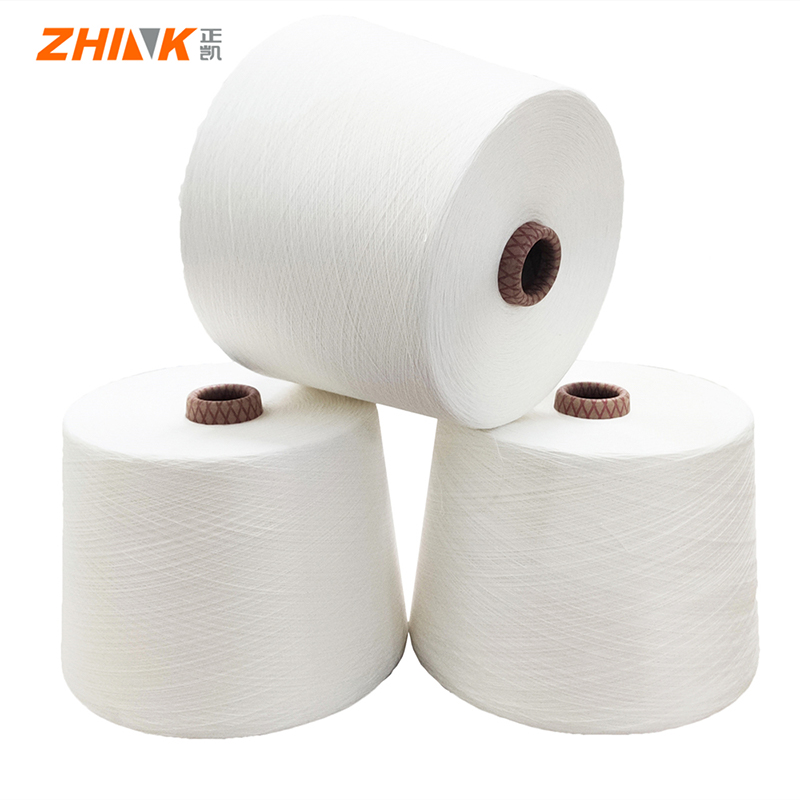
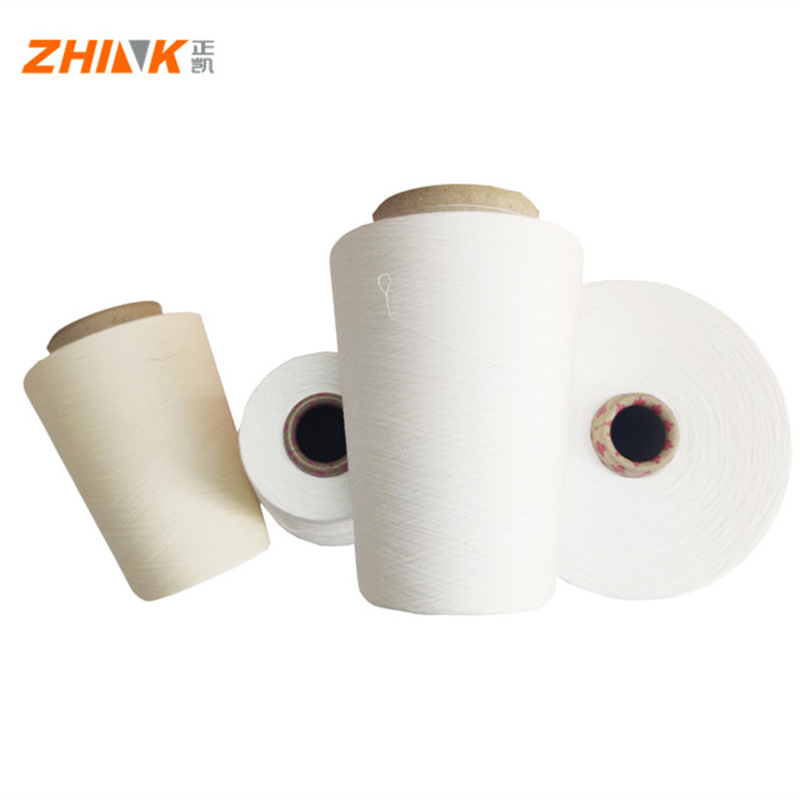
Recycled polyester staple fiber yarn
Understanding Recycled Polyester Staple Fiber Yarn
Recycled polyester staple fiber yarn might sound niche, but it’s pivotal in today’s textile industry. This article explores practical insights, industry experiences, and some challenges often overlooked in discussions about this sustainable material.
The Basics of Recycled Polyester
The urge to explore sustainable materials has driven recycled polyester staple fiber yarn to the forefront. Often derived from PET bottles, this yarn attempts to bridge environmental concerns with industrial needs. However, there's a common misconception about its quality—many assume recycled automatically means lower performance.
In practice, properties like strength, texture, and durability can rival virgin polyester. Yet, achieving uniformity remains a challenge. I recall a project with Shandong Zhink New Material Co., Ltd., where achieving consistent dye uptake across batches was initially tricky. It took numerous trials to stabilize.
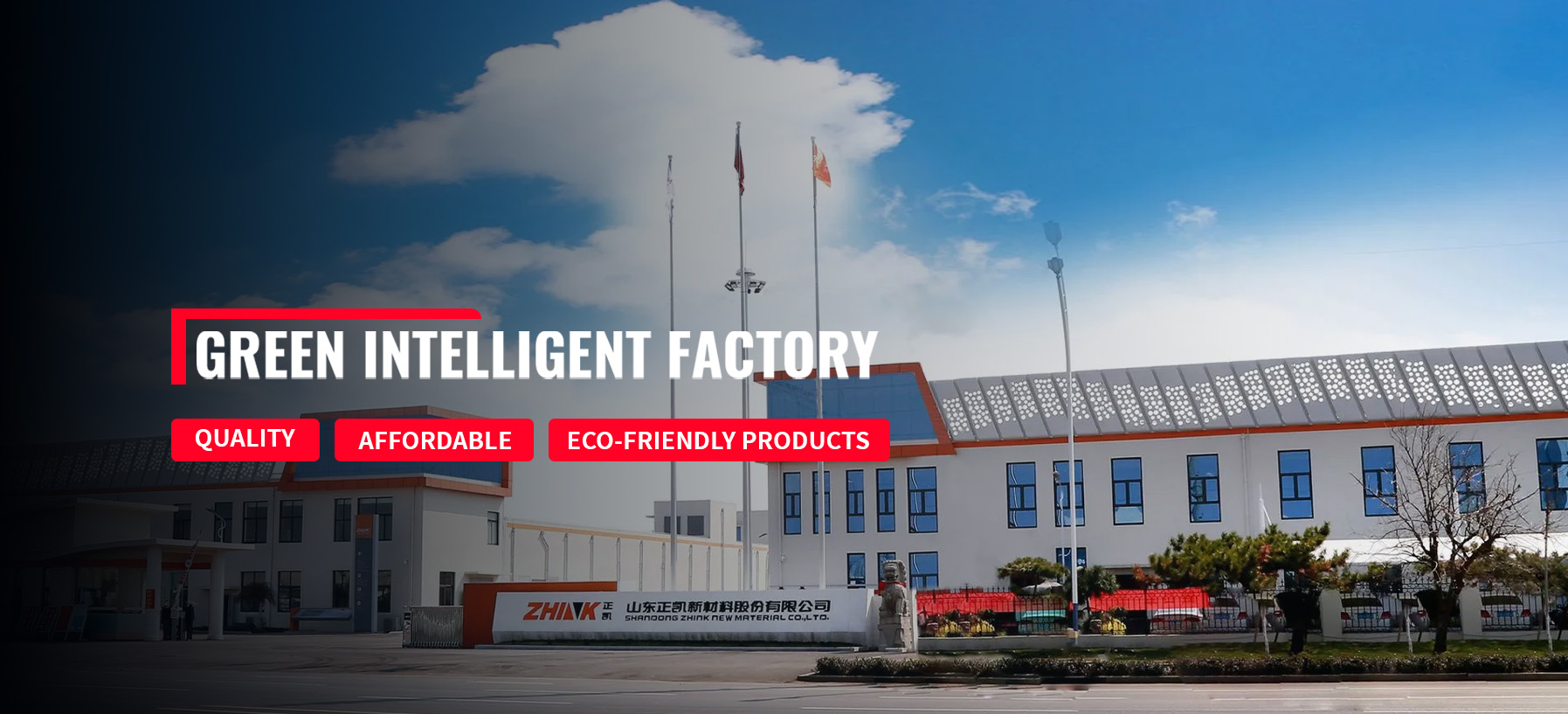
Manufacturers like Zhink New Material, with their expertise in R&D and production, often face this balancing act between sustainability and quality. They provide a resource at their website where more technical details and case studies are accessible.
Production Nuances
Recycling PET into yarn isn’t as straightforward as melting and re-spinning. The sorting, cleaning, and processing stages are intricate. Contaminants in sourced bottles can vary batch by batch, affecting quality.
Zhink's approach involves meticulous checks. Their system weeds out impurities early in the process—this is not standard everywhere, but it’s a practice that minimizes issues down the line. It’s one of those lessons you learn on the job—attention to foundational details pays off later.
Despite best practices, challenges persist. One frustrating setback was a residual acetaldehyde scent in a batch of yarn. It required re-evaluating pre-production treatments and adjusting them, an exhausting but enlightening process for the team.
Application Insights
Recycled polyester finds its way into various applications—from fashion textiles to industrial fabrics. Each application demands specific properties, and knowing these requisites is half the battle.
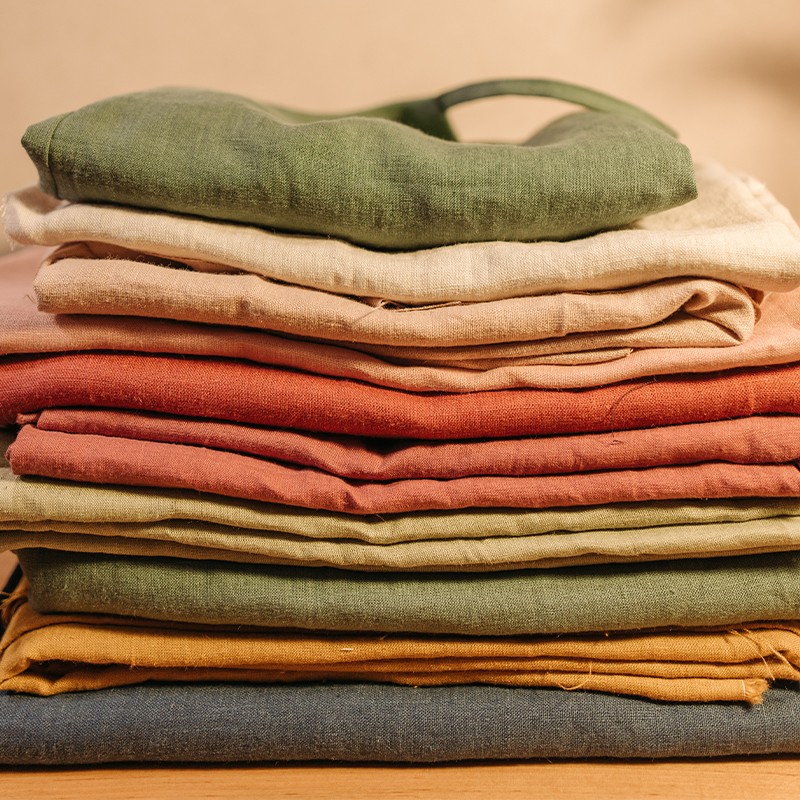
In fashion, for instance, soft hand feel and vibrant colors are pivotal. Here, recycled yarn’s role isn’t just functional but aesthetic. I remember collaborating on a fashion line where the challenge was color consistency, and this is an area where Zhink’s expertise, again, came through.
For non-apparel uses, including geotextiles or automotive fabrics, strength and durability take precedence. Recycled yarn here competes on performance, yet cost considerations often dictate choices, which can lead to compromise.
Environmental and Economic Impacts
Adopting recycled materials isn’t merely a marketing gimmick—it has genuine environmental benefits. By reusing PET, we cut down emissions and landfill waste significantly.
However, the economic side can be a double-edged sword. While initial material costs might be lower, the processing complexity can drive expenses up. This is often a tightrope walk for manufacturers trying to stay competitive.
Despite potential higher costs, companies like Zhink New Material push forward, motivated by a broader sustainability vision. Their commitment reflects an evolving industry standard, with more partners seeking similar materials.
Futureof Recycled Polyester Yarn
Looking ahead, advancements in technology promise better recycling methods that are cleaner and more efficient. Innovations are ongoing, focusing on minimizing the energy footprint of transforming waste into fiber.
Collaboration between tech developers and textile manufacturers could advance processes and make recycled polyester staple fiber yarn more attractive and affordable. It's about striking a balance between technological feasibility and market demands.
So, whether influenced by environmental drives or economic necessity, the journey of recycled polyester staple fiber yarn is one of trial and learning. Each step forward is a testament to the resilience and adaptability of companies like SHANDONG ZHINK NEW MATERIAL CO., LTD, who are at the helm of transforming the textile landscape for a sustainable future.
Related Products
Related Products