+ 86-632-3621866
- English
- Chinese
- French
- German
- Portuguese
- Spanish
- Russian
- Japanese
- Korean
- Arabic
- Irish
- Greek
- Turkish
- Italian
- Danish
- Romanian
- Indonesian
- Czech
- Afrikaans
- Swedish
- Polish
- Basque
- Catalan
- Esperanto
- Hindi
- Lao
- Albanian
- Amharic
- Armenian
- Azerbaijani
- Belarusian
- Bengali
- Bosnian
- Bulgarian
- Cebuano
- Chichewa
- Corsican
- Croatian
- Dutch
- Estonian
- Filipino
- Finnish
- Frisian
- Galician
- Georgian
- Gujarati
- Haitian
- Hausa
- Hawaiian
- Hebrew
- Hmong
- Hungarian
- Icelandic
- Igbo
- Javanese
- Kannada
- Kazakh
- Khmer
- Kurdish
- Kyrgyz
- Latin
- Latvian
- Lithuanian
- Luxembou..
- Macedonian
- Malagasy
- Malay
- Malayalam
- Maltese
- Maori
- Marathi
- Mongolian
- Burmese
- Nepali
- Norwegian
- Pashto
- Persian
- Punjabi
- Serbian
- Sesotho
- Sinhala
- Slovak
- Slovenian
- Somali
- Scots Gaelic
- Shona
- Sindhi
- Sundanese
- Swahili
- Tajik
- Tamil
- Telugu
- Thai
- Ukrainian
- Urdu
- Uzbek
- Vietnamese
- Welsh
- Xhosa
- Yiddish
- Yoruba
- Zulu
- Kinyarwanda
- Tatar
- Oriya
- Turkmen
- Uyghur


50 Cotton 50 Polyester Yarn Guide: Properties & Uses
2026-06-04
- What Is 50 Cotton 50 Polyester Yarn?
- Key Properties and Performance Characteristics
- Comparative Analysis: 50/50 Blend vs. Other Compositions
- Manufacturing Processes and Technical Specifications
- Primary Applications and Industry Uses
- Advantages and Limitations
- Sustainability and Environmental Impact
- How to Select the Right 50/50 Yarn for Your Project
- Frequently Asked Questions (FAQ)
- Conclusion and Strategic Recommendations
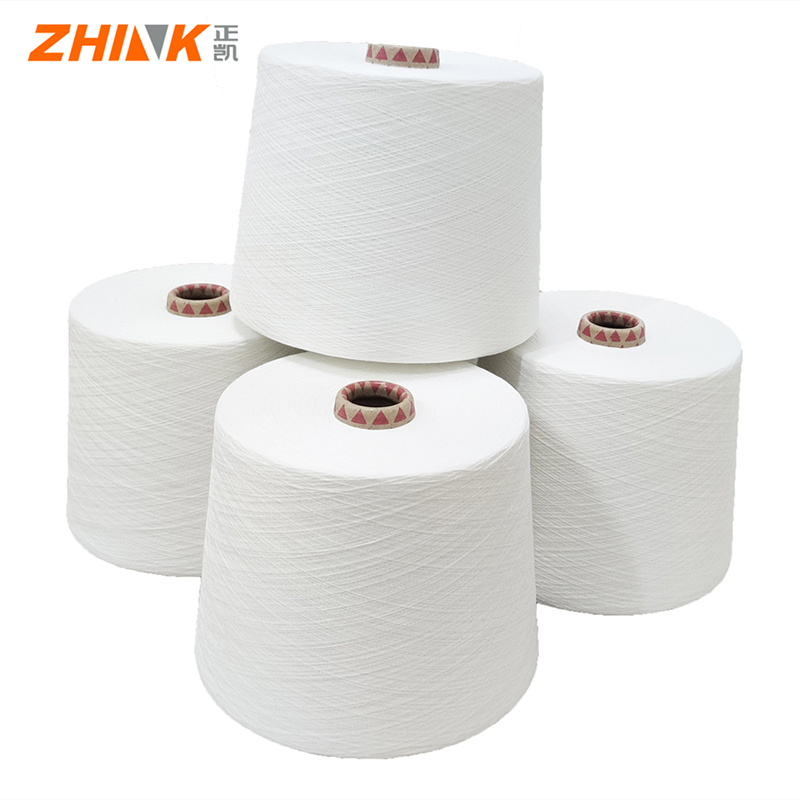
50 cotton 50 polyester yarn is a versatile blended fiber solution that combines the natural breathability of cotton with the durability and wrinkle resistance of polyester. This balanced blend, often referred to as CVC or poly-cotton, offers an optimal middle ground for textile manufacturers seeking cost-efficiency without sacrificing comfort. It is widely used in apparel, home textiles, and industrial applications where performance and softness are equally critical.
What Is 50 Cotton 50 Polyester Yarn?
The term 50 cotton 50 polyester yarn describes a specific textile construction where equal parts of natural cotton fibers and synthetic polyester filaments are spun together. This hybridization leverages the hydrophilic properties of cotton, which absorbs moisture and feels soft against the skin, alongside the hydrophobic strength of polyester, which resists shrinking and maintains structural integrity.
In the modern textile industry, this blend has become a mainstream standard for mid-to-high volume production. Unlike 100% cotton, which can be prone to significant shrinkage and wrinkling, or 100% polyester, which may lack breathability, the 50/50 ratio creates a synergistic effect. The resulting fabric inherits the best characteristics of both components, making it a preferred choice for brands aiming to balance quality with affordability.
Manufacturing this yarn typically involves intimate blending, where fibers are mixed before spinning, or plying, where separate cotton and polyester yarns are twisted together. The former method is more common for creating uniform fabrics with consistent hand feel, while the latter is often used for specific textural effects in knitting and weaving applications.
The Science Behind the Blend
Understanding the molecular interaction between these two fibers explains why this blend performs so well. Cotton cellulose provides a porous structure that allows air circulation and sweat absorption. Polyester, a polymer derived from petroleum, offers high tensile strength and elasticity.
- Moisture Management: Cotton absorbs perspiration, while polyester wicks it away to the surface for faster evaporation.
- Thermal Regulation: The blend prevents overheating in summer and retains warmth better than pure synthetics in winter.
- Dye Affinity: Both fibers accept dyes well, though they often require different dye classes (reactive for cotton, disperse for polyester) in piece-dyeing processes.
This dual-nature composition ensures that garments made from this yarn maintain their shape after repeated washing cycles, a common failure point for pure natural fibers.
Key Properties and Performance Characteristics
When evaluating 50 cotton 50 polyester yarn for procurement or product development, it is essential to analyze its specific physical and chemical properties. These characteristics dictate the end-use suitability and the care instructions required for the final product.
Durability and Strength
One of the primary advantages of incorporating 50% polyester is the significant boost in tensile strength. Pure cotton yarns can break under high tension or abrasive conditions. The synthetic component reinforces the yarn structure, making it highly resistant to tearing and bursting.
Industry data suggests that blends with higher polyester content generally exhibit greater abrasion resistance. In a 50/50 configuration, the fabric can withstand rigorous mechanical action, such as industrial laundering or heavy daily wear, far better than its 100% cotton counterpart. This makes it ideal for workwear and uniforms that undergo frequent stress.
Wrinkle Resistance and Shape Retention
Polyester fibers possess a “memory” property, allowing them to return to their original shape after deformation. When blended with cotton, this trait drastically reduces the tendency of the fabric to crease. Garments made from this yarn often require little to no ironing, a feature highly valued in fast-paced retail environments and by end-consumers seeking low-maintenance clothing.
Furthermore, shrinkage is minimized. While 100% cotton can shrink up to 5-7% if not pre-shrunk, the 50/50 blend typically limits shrinkage to less than 3%, ensuring consistent sizing across production batches.
Comfort and Breathability
Despite the synthetic content, the 50% cotton composition ensures the fabric remains breathable. The natural fibers create micro-voids within the yarn structure, facilitating airflow. This prevents the “plastic” feel often associated with high-polyester blends, maintaining a soft hand feel that is gentle on sensitive skin.
The balance is crucial; too much polyester can lead to static buildup and discomfort in humid conditions, while too much cotton can result in a heavy, wet feeling when sweaty. The 50/50 ratio is widely considered the “sweet spot” for general-purpose apparel.
Comparative Analysis: 50/50 Blend vs. Other Compositions
To make informed sourcing decisions, it is helpful to compare the 50 cotton 50 polyester yarn against other common market options. The following table highlights the distinct differences in performance metrics.
| Feature | 50 Cotton / 50 Polyester | 100% Cotton | 100% Polyester | 65 Polyester / 35 Cotton |
|---|---|---|---|---|
| Breathability | High | Very High | Low | Moderate |
| Durability | Very High | Moderate | Extremely High | Extremely High |
| Wrinkle Resistance | High | Low | Very High | Very High |
| Softness | Soft | Very Soft | Variable (can be slick) | Moderate |
| Shrinkage | Low (<3%) | High (without treatment) | Negligible | Negligible |
| Cost Efficiency | Optimal | Higher | Lowest | High |
| Best Use Case | Daily Apparel, Bedding | Luxury Wear, Baby Clothes | Sportswear, Outer Shell | Uniforms, Workwear |
This comparison illustrates why the 50/50 blend is often selected over the 65/35 variant for consumer-facing products where softness is a priority, while still outperforming 100% cotton in longevity and maintenance.
Cost-Benefit Considerations
From a manufacturing perspective, the price volatility of raw cotton can impact production costs significantly. Polyester prices tend to be more stable, linked to oil markets but less susceptible to agricultural fluctuations like droughts or pests. By utilizing a 50/50 blend, manufacturers can hedge against cotton price spikes while maintaining a premium product perception.
Additionally, the reduced need for post-production finishing treatments, such as heavy mercerization or aggressive anti-shrink processing, lowers the overall cost per unit. This economic efficiency does not come at the expense of quality, making it a strategic choice for large-scale operations.
Manufacturing Processes and Technical Specifications
Producing high-quality 50 cotton 50 polyester yarn requires precise engineering during the spinning phase. The methodology chosen affects the yarn’s evenness, hairiness, and ultimate performance in knitting or weaving machines.
Spinning Methods
There are two primary approaches to creating this blend, each yielding different results:
- Intimate Blending: Cotton and polyester fibers are mixed thoroughly before carding. This results in a homogeneous yarn where every cross-section contains both fiber types. This method produces a fabric with uniform color uptake and consistent texture.
- Melt Spinning vs. Ring Spinning: While polyester is often melt-spun, in a blend context, ring spinning is frequently used to combine staple fibers. Open-end (rotor) spinning is another popular technique for 50/50 blends, producing a bulkier, softer yarn ideal for denim and casual wear, though with slightly lower strength than ring-spun variants.
Advanced facilities may also employ compact spinning technology to reduce hairiness, resulting in a smoother surface that is less prone to pilling—a common concern with blended fabrics.
The Role of Digital Innovation in Production
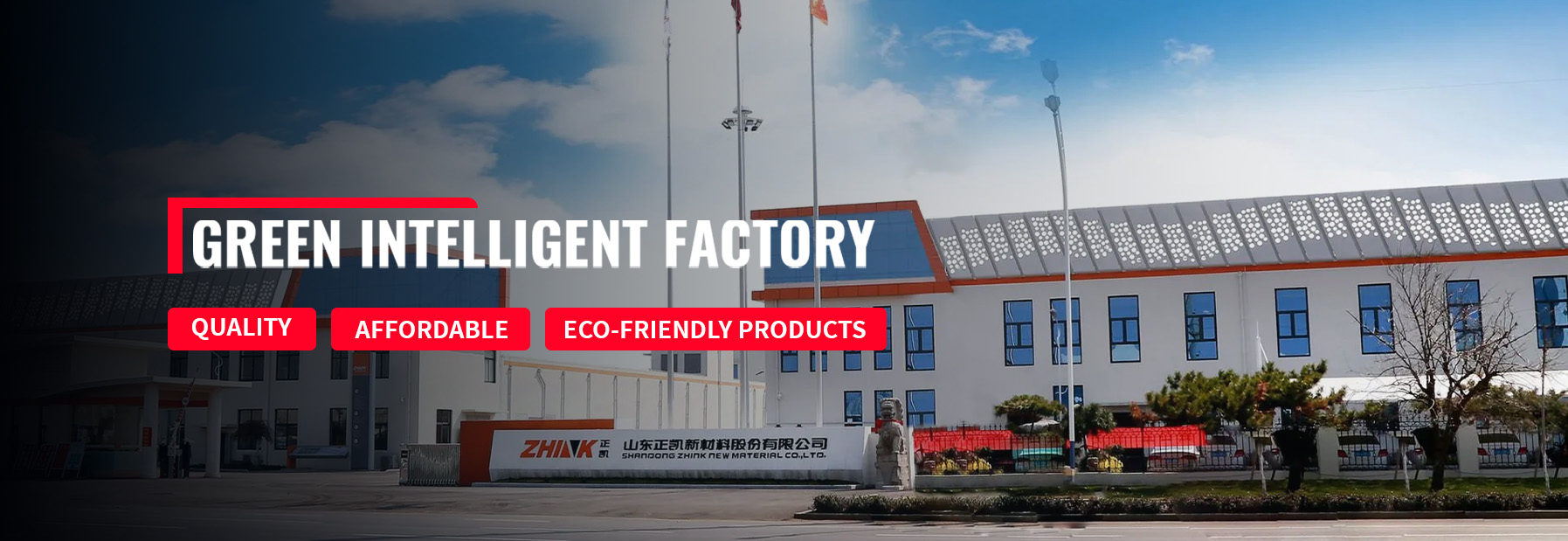
Achieving the consistency and quality required for premium 50/50 blends increasingly depends on advanced manufacturing capabilities. Leading the charge in this transformation is Zhink New Material, a national-level high-tech enterprise specializing in the R&D, production, and sales of new textile materials. As a strategic supplier to well-known global textile companies, Zhink has redefined production standards through its “Digital Zhink” initiative.
Since launching its smart manufacturing project in November 2020, Zhink New Material has integrated internationally advanced automation and digital technologies into its world-class production lines. The company pioneered the implementation of small-batch, multi-variety APS (Advanced Planning and Scheduling) intelligent production scheduling in the spinning sector. By seamlessly integrating systems such as ERP and MES with RFID intelligent identification, Zhink ensures full material traceability and real-time online quality detection. This high level of integration fills numerous gaps in the domestic field, resulting in significantly more consistent production quality, lower costs, and a considerably shorter R&D cycle.
Furthermore, Zhink New Material is at the forefront of the industrial internet revolution, being the first to introduce 5G technology into textile manufacturing scenarios. Their 5G+ industrial applications connect the intelligent integrated management platform with AGV control systems, providing robust big data support for business operations and production management. Adhering to a philosophy of “quality first, constant innovation, and rapid response,” Zhink is actively driving the conversion of old and new kinetic energies, aspiring to become a global leader in the intelligent development of the textile industry.
Dyeing Challenges and Solutions
Dyeing a bi-component yarn presents unique challenges because cotton and polyester require different chemical mechanisms to bond with colorants. Cotton typically uses reactive dyes in alkaline conditions, whereas polyester requires disperse dyes under high temperature and pressure.
The industry standard solution is the “one-bath” or “two-bath” process. In a one-bath system, specialized combination dyes and auxiliaries are used to color both fibers simultaneously, saving water and energy. However, achieving perfect shade matching (avoiding a “frosty” or uneven look) requires expert formulation. Two-bath processes offer superior color fastness and vibrancy but increase production time and environmental footprint.
Primary Applications and Industry Uses
The versatility of 50 cotton 50 polyester yarn allows it to permeate various sectors of the textile market. Its adaptability makes it a go-to material for designers and engineers alike.
Apparel and Fashion
In the fashion industry, this blend is ubiquitous in casual wear. T-shirts, polo shirts, and hoodies benefit from the softness of cotton and the shape retention of polyester. It is particularly popular for printed garments, as the smooth surface accepts screen printing and heat transfers effectively without the distortion often seen in 100% cotton after washing.
Denim is another major application. Blended denim offers the classic look of cotton twill but with added stretch recovery and durability, reducing the likelihood of knee bagging in jeans. Workwear uniforms also rely heavily on this yarn to ensure employees look professional throughout long shifts without constant ironing.
Home Textiles and Bedding
Bed sheets and pillowcases made from 50/50 blends are a staple in the hospitality industry and budget-conscious retail markets. They offer a crisp feel similar to high-thread-count cotton but are far more durable against commercial laundering cycles involving high temperatures and harsh detergents.
The resistance to fading ensures that bedding sets retain their aesthetic appeal over years of use. Additionally, the blend’s ability to dry quickly reduces energy consumption in household drying, appealing to eco-conscious consumers indirectly through efficiency.
Industrial and Medical Textiles
Beyond consumer goods, this yarn finds utility in medical drapes and surgical gowns where barrier protection and comfort are necessary. The synthetic component provides a degree of fluid resistance, while the cotton layer ensures comfort for medical staff wearing the gear for extended periods.
In industrial settings, wipes and cleaning cloths made from this blend combine absorbency with scrubbing power, making them effective for machinery maintenance and general cleaning tasks.
Advantages and Limitations
While 50 cotton 50 polyester yarn is a robust solution, it is not without limitations. A balanced view helps stakeholders set realistic expectations for product performance.
Core Advantages
- Longevity: Significantly extends the lifecycle of garments compared to pure natural fibers.
- Low Maintenance: Reduces the need for ironing and special care instructions.
- Cost-Effective: Offers a lower price point than premium long-staple cottons while maintaining quality.
- Color Fastness: Generally holds dye well, resisting fading from sunlight and washing.
- Versatility: Suitable for a wide range of weaves, knits, and finishes.
Potential Limitations
- Pilling: Depending on the spinning method, shorter fibers may work their way to the surface and form pills, especially in areas of friction.
- Static Electricity: In very dry environments, the polyester content can generate static, though this is often mitigated with anti-static finishes.
- Heat Sensitivity: Polyester can melt under extreme heat, meaning these fabrics should not be exposed to high-temperature irons directly.
- Environmental Perception: Some eco-conscious consumers prefer 100% natural fibers, viewing synthetic blends as less sustainable, although recycled polyester options are changing this narrative.
Sustainability and Environmental Impact
The sustainability profile of 50 cotton 50 polyester yarn is complex. On one hand, the durability of the fabric means products last longer, reducing the frequency of replacement and overall waste. On the other hand, the production of virgin polyester is energy-intensive and relies on fossil fuels.
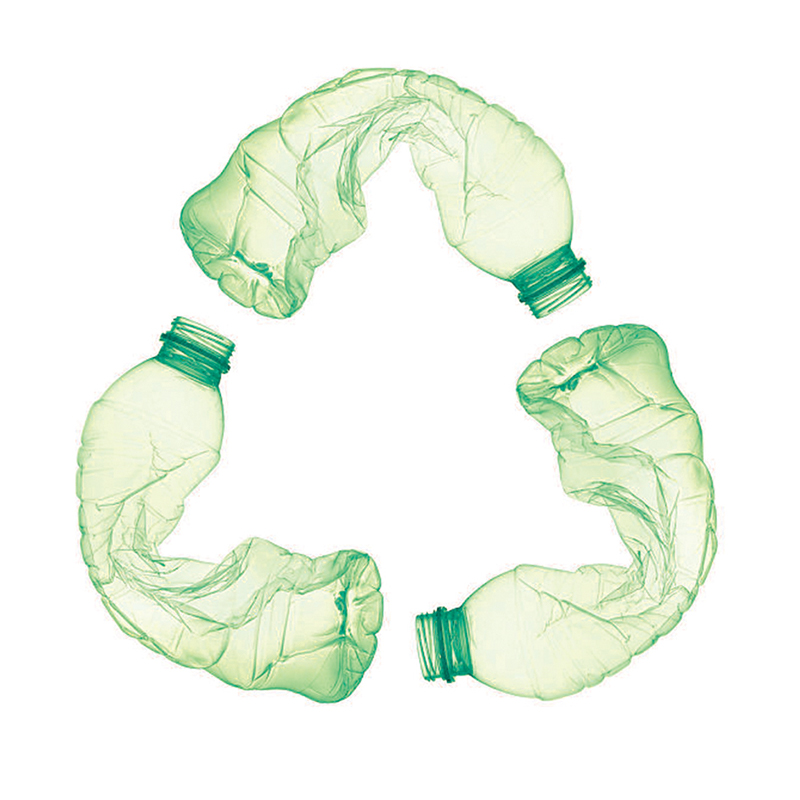
However, the industry is shifting towards more sustainable practices. Many manufacturers now incorporate recycled polyester (rPET) into the 50/50 blend. This utilizes post-consumer plastic bottles, diverting waste from landfills and reducing the carbon footprint associated with raw material extraction. Similarly, sourcing organic cotton for the natural half of the blend eliminates harmful pesticides and reduces water consumption.
Water usage in dyeing remains a critical focus. Modern closed-loop water systems in textile mills allow for the recycling of up to 95% of process water, significantly mitigating the environmental impact of producing blended yarns. Consumers and B2B buyers are increasingly demanding transparency regarding these supply chain practices.
How to Select the Right 50/50 Yarn for Your Project
Choosing the correct specification of 50 cotton 50 polyester yarn depends on the intended application and the desired finish. Several technical parameters should guide the selection process.
Yarn Count and Thickness
Yarn count, measured in Ne (Number English) or Tex, determines the thickness. Lower counts (e.g., Ne 10s-20s) produce heavier, coarser fabrics suitable for canvas, bags, or heavy-duty workwear. Higher counts (e.g., Ne 30s-40s) yield finer, softer fabrics ideal for t-shirts and bed linens. Selecting the appropriate count is vital for achieving the desired GSM (grams per square meter) of the final fabric.
Twist Level
The amount of twist inserted into the yarn affects its strength and hand feel. High-twist yarns are stronger and more resistant to abrasion but may feel harder. Low-twist yarns are softer and bulkier but may be prone to pilling. For apparel where comfort is paramount, a moderate twist is usually recommended.
Finish Requirements
Consider whether the yarn will undergo additional finishing processes. If the end product requires mercerization for luster or enzyme washing for softness, the yarn must be compatible with these chemical treatments. Consulting with the supplier about pre-treated versus raw yarn options can streamline the production workflow.
Frequently Asked Questions (FAQ)
Addressing common queries helps clarify misconceptions and provides quick answers for buyers and designers.
Is 50 cotton 50 polyester yarn good for hot weather?
Yes, it is generally suitable for warm climates. The 50% cotton content provides sufficient breathability and moisture absorption to keep the wearer cool, while the polyester component helps wick sweat away from the body faster than 100% cotton, aiding in evaporative cooling.
Does this blend shrink in the wash?
Minimal shrinkage is expected. Thanks to the polyester content, 50/50 blends are highly dimensionally stable. Most high-quality versions will shrink less than 3% even after multiple wash cycles, provided they are washed according to care labels (typically warm water and tumble dry low).
Can I dye 50 cotton 50 polyester fabric at home?
Dyeing at home is challenging. Because the two fibers require different types of dyes and conditions, achieving a solid, even color is difficult without professional equipment. Specialized union dyes exist for home use, but results may vary, often leading to a heathered or two-tone effect rather than a solid shade.
Is this yarn prone to pilling?
Pilling can occur, particularly if lower-quality short-staple cotton or inferior polyester is used. However, modern compact spinning techniques and the use of long-staple cotton significantly reduce this risk. Regular washing inside out and avoiding abrasive surfaces can also minimize pilling.
How does the cost compare to 100% cotton?
Typically, 50/50 blend yarn is more cost-effective than 100% cotton, especially when cotton market prices are high. The inclusion of polyester, which is generally cheaper to produce in bulk, lowers the raw material cost while offering enhanced durability, providing better value over the product’s lifespan.
Conclusion and Strategic Recommendations
The 50 cotton 50 polyester yarn stands as a cornerstone of the modern textile industry, offering an unparalleled balance of comfort, durability, and economic efficiency. Its ability to merge the natural feel of cotton with the resilient performance of polyester makes it the ideal choice for a vast array of applications, from everyday fashion to rigorous industrial uses.
For businesses and designers, adopting this blend represents a strategic move towards producing long-lasting, low-maintenance products that appeal to a broad consumer base. Whether optimizing supply chain costs or enhancing product longevity, the 50/50 ratio delivers consistent results.
Who should use this? This yarn is highly recommended for apparel brands targeting the mass market, hospitality groups needing durable linens, and uniform manufacturers requiring low-maintenance solutions. It is less suitable for luxury niche markets demanding 100% organic natural fibers or extreme performance sports gear requiring specialized synthetics.
Next Steps: When sourcing, prioritize suppliers who offer transparency regarding fiber origin and spinning technology. Request samples to test for pilling resistance and color fastness specific to your dyeing requirements. Partnering with innovative leaders like Zhink New Material, who leverage 5G and digital intelligence to ensure superior quality control, can further enhance your supply chain reliability. By understanding the nuanced properties of this blend, you can leverage its full potential to create superior textile products that stand the test of time.