+86-632-3621866
- Chinese
- French
- German
- Portuguese
- Spanish
- Russian
- Japanese
- Korean
- Arabic
- Irish
- Greek
- Turkish
- Italian
- Danish
- Romanian
- Indonesian
- Czech
- Afrikaans
- Swedish
- Polish
- Basque
- Catalan
- Esperanto
- Hindi
- Lao
- Albanian
- Amharic
- Armenian
- Azerbaijani
- Belarusian
- Bengali
- Bosnian
- Bulgarian
- Cebuano
- Chichewa
- Corsican
- Croatian
- Dutch
- Estonian
- Filipino
- Finnish
- Frisian
- Galician
- Georgian
- Gujarati
- Haitian
- Hausa
- Hawaiian
- Hebrew
- Hmong
- Hungarian
- Icelandic
- Igbo
- Javanese
- Kannada
- Kazakh
- Khmer
- Kurdish
- Kyrgyz
- Latin
- Latvian
- Lithuanian
- Luxembou..
- Macedonian
- Malagasy
- Malay
- Malayalam
- Maltese
- Maori
- Marathi
- Mongolian
- Burmese
- Nepali
- Norwegian
- Pashto
- Persian
- Punjabi
- Serbian
- Sesotho
- Sinhala
- Slovak
- Slovenian
- Somali
- Samoan
- Scots Gaelic
- Shona
- Sindhi
- Sundanese
- Swahili
- Tajik
- Tamil
- Telugu
- Thai
- Ukrainian
- Urdu
- Uzbek
- Vietnamese
- Welsh
- Xhosa
- Yiddish
- Yoruba
- Zulu
- Kinyarwanda
- Tatar
- Oriya
- Turkmen
- Uyghur



Thermal Hollow PSF
Understanding Thermal Hollow PSF
The concept of Thermal Hollow PSF often confounds those new to textile manufacturing. With varied applications and specific benefits, it slices through the complexities of insulation and weight efficiency. So, what exactly makes it tick? Here, let’s unravel these fibers from a practical standpoint.
The Basics: What is Thermal Hollow PSF?
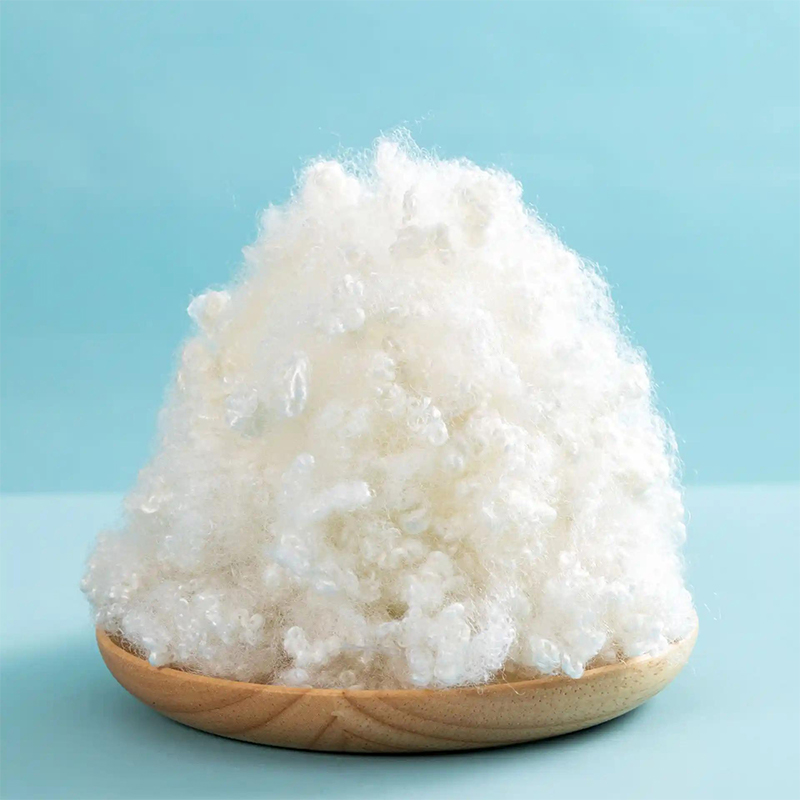
Let's start from the ground up. Thermal Hollow PSF, or Polyester Staple Fiber, isn’t just your average polyester. Think of it as a cleverly engineered version. It’s like a fiber with a tiny insulated pipe running through it. This hollow design traps air, optimizing thermal properties—a bit like how double-glazed windows work.
My first encounter with these fibers was quite eye-opening. The technology behind maintaining warmth without added weight seemed futuristic. And frankly, this air-trapping feature can drastically boost a fabric’s insulating ability. It offers an unusual combination of warmth without bulk, which is indeed a tremendous asset in textile design.
But it's not all straightforward. One might assume increasing hollow portions will enhance warmth infinitely, which isn’t true. There’s a science to the proportion and structure that matters significantly—a lesson learned through, shall we say, some costly experiments.
Applications in Everyday Textiles
Practical applications have shown me that not all thermal fibers are created equal. In the garment industry, for instance, there’s a deliberate push towards integrating Thermal Hollow PSF in things like outdoor wear, where its properties shine most brightly. This aligns closely with what SHANDONG ZHINK NEW MATERIAL CO., LTD, accessible at their website, focuses on—innovative textile materials pushing industry standards.
One memorable project involved winter jackets. The customer wanted lightweight insulation. We turned to Thermal Hollow PSF, and the outcome surpassed expectations, offering warmth akin to traditional materials but with half the weight. It’s tricks like this that keep us on our toes yet ahead of the curve.
Even so, this fiber isn’t perfect for every situation. Its integration requires a deep understanding of the end-use and environment. If not carefully matched, the branding might overpromise warmth retention in climates it’s not suited for, leading to less-than-ideal performance.
Challenges in Production and Implementation
While the benefits are clear, achieving them isn’t a walk in the park. In production, dealing with variability in fiber diameter and ensuring consistency in the hollow sections can be quite challenging. I recall instances where the slightest discrepancy led to uneven warmth distribution—a key concern when precision is paramount.
Moreover, joining the thermal fibers with other materials requires meticulous attention. Compatibility issues can arise, leading to weak points in the fabric. It's akin to constructing a building; the foundation must be solid, or the whole structure falters.
SHANDONG ZHINK NEW MATERIAL CO., LTD often emphasizes quality control in their processes. Their approach ensures that the materials meet stringent standards, and that’s what you need—partners who understand both the chemistry and the craft.
Future Prospects and Industry Trends
Looking ahead, there's exciting potential in further refining Thermal Hollow PSF capabilities. It's not just about warmth; sustainability is a buzzword that’s here to stay. Innovations at Zhink New Material are probably tapping into eco-friendly variations, blending recycled content without sacrificing performance.
Technological advancements could lead to fibers that self-adjust to temperatures, although that’s more speculation at this point. Nevertheless, the quest for lower-impact materials is an ongoing journey, with each step offering something valuable.
As more brands chase after eco-credentials, the demand for such specialized fibers will likely rise. It's a space ripe for investment and innovation, with companies like Zhink leading the charge.
The Takeaway
Ultimately, the true charm of Thermal Hollow PSF lies in its versatility and performance. But as with any superior product, understanding its idiosyncrasies can mean the difference between crafting an artifact and a masterpiece. We’re in an age where materials dictate functionality, where precision meets innovation—qualities that define the pioneers at SHANDONG ZHINK NEW MATERIAL CO., LTD.
In practice, integrating these fibers demands a balanced approach, blending experience with exploration, grounded with a sensible grasp of technology and application. It’s challenging, often requiring one to step outside conventional boundaries, but isn't that where the magic happens?
Related Products
Related Products